

Module 1: Introduction to UML and the AI Transformation
Welcome to the first module of Mastering UML with Visual Paradigm AI: From Natural Language to Professional System Blueprints. This opening chapter sets the stage for a profound evolution in how software professionals approach modeling and design. In an era where speed, accuracy, and collaboration define project success, we explore how the Unified Modeling Language (UML)—combined with Visual Paradigm‘s cutting-edge AI capabilities—transforms abstract ideas into precise, actionable visual blueprints.
Overview
This module introduces the foundational shift occurring in modern software engineering: moving from labor-intensive, manual diagramming practices to intelligent, AI-driven visual modeling. By leveraging natural language to generate and refine diagrams, we bridge the traditional chasm between conceptual thinking and concrete implementation. No longer is diagramming a tedious “drawing chore”—it becomes a fluid act of articulation, turning high-level visions into standards-compliant models in seconds. This transformation accelerates project initiation, reduces errors, and empowers teams to focus on innovation rather than syntax.
1. Defining UML in the Modern Era
The Unified Modeling Language (UML) remains the industry-standard visual language for specifying, visualizing, constructing, and documenting software-intensive systems. As defined by the Object Management Group (OMG), UML provides a formalized way to express system structure, behavior, requirements, and architecture.
At its core, UML acts as a shared “software blueprint.” It ensures alignment among developers, architects, stakeholders, and business teams by offering clear, unambiguous representations of:
- System behavior and interactions
- Stakeholder needs and use cases
- Operational logic and constraints
Without this visual foundation, critical details often remain implicit, scattered in documents, conversations, or code comments. The result is a notorious design-implementation gap—where the final codebase drifts from the intended architecture, leading to technical debt, rework, and missed requirements. UML closes this gap by creating a single source of truth that evolves alongside the project.
2. The Shift from “Drawing” to “Articulation”
Historically, crafting UML diagrams demanded significant effort: mastering notation rules, manually positioning shapes, drawing connectors, and ensuring consistency. Many teams perceived modeling as a bottleneck—time-consuming and error-prone—often postponing or skipping it altogether in fast-paced agile environments.
Visual Paradigm’s AI-powered platform fundamentally changes this dynamic. The emphasis shifts from mechanical drawing to intelligent articulation. Engineers and analysts now describe systems, processes, or requirements in plain English, and the AI instantly produces accurate, professionally formatted diagrams.
This evolution mirrors the leap from traditional sculpting—where every chisel strike carried irreversible risk—to modern 3D printing, where precise digital specifications yield flawless physical (or in this case, visual) results. With AI handling layout, notation compliance, and initial structure, modeling becomes conversational, iterative, and accessible—even to those new to UML.
3. Specialized AI vs. General-Purpose Large Language Models (LLMs)
General-purpose LLMs (such as those powering many chat interfaces) can produce text descriptions or even PlantUML code snippets for diagrams. However, they function more like talented “sketch artists”—creative but often inconsistent with formal engineering standards.
Visual Paradigm’s AI stands apart as a specialized modeling intelligence, deeply trained on official specifications including UML 2.5, ArchiMate 3, SysML, C4 models, and more. Key advantages include:
- Accuracy and Standards Compliance General LLMs frequently introduce syntax errors, misuse relationships (e.g., confusing aggregation with composition), or misapply concepts like polymorphism and visibility modifiers. Visual Paradigm AI enforces correct notation, semantics, and naming conventions, producing diagrams that are immediately usable in professional contexts.
- State Management and Safe Iteration Most general LLMs regenerate diagrams from scratch with each change, often disrupting layouts, breaking connectors, or losing context. Visual Paradigm’s conversational refinement—supported by iterative commands like “Add two-factor authentication” or “Refine this sequence with error handling”—preserves diagram structure and state. This enables safe, incremental evolution, much like editing a living document rather than redrawing from scratch.
4. Navigating the Visual Paradigm AI Ecosystem
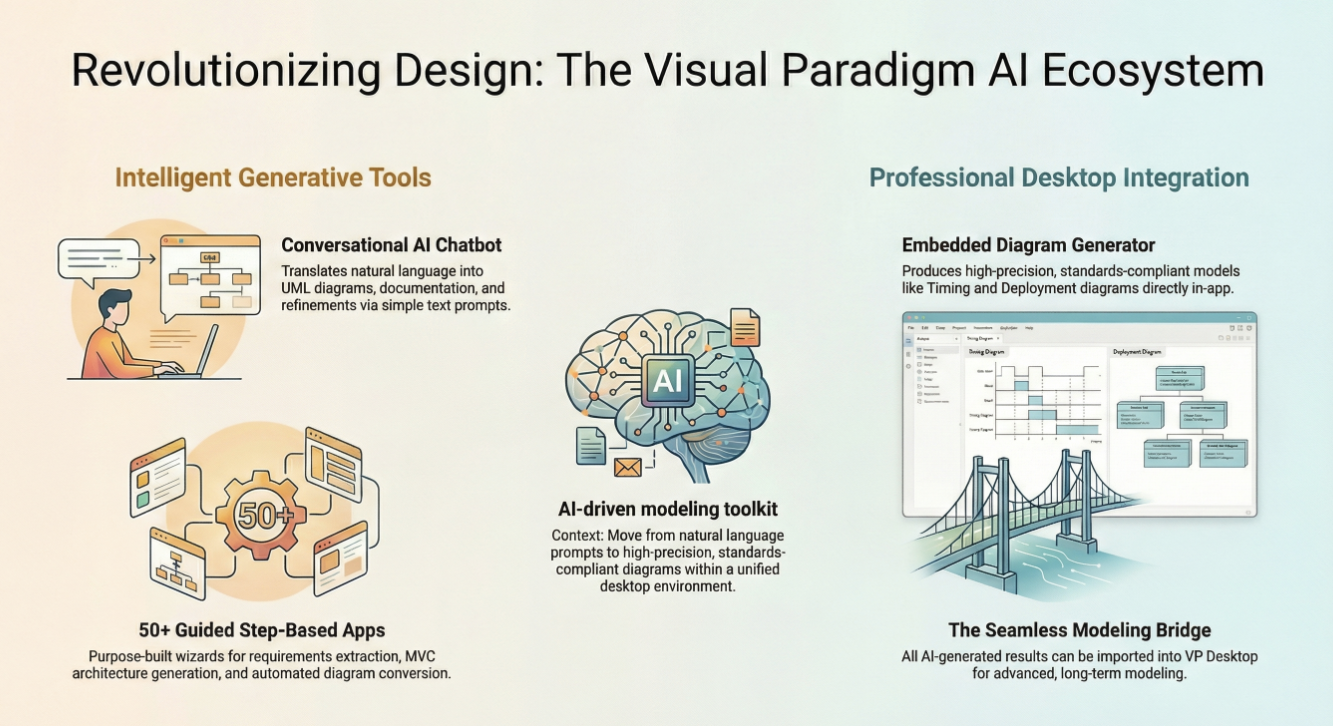
Visual Paradigm integrates generative AI seamlessly into its robust modeling platform, offering a multi-layered toolkit designed for every stage of system design:
- AI Chatbot (The Conversational Bridge) The heart of the experience: a cloud-powered, desktop-integrated chatbot that translates natural language into UML (and other) diagrams. Generate from scratch, request refinements, ask for explanations, or even generate documentation—all through simple text prompts.
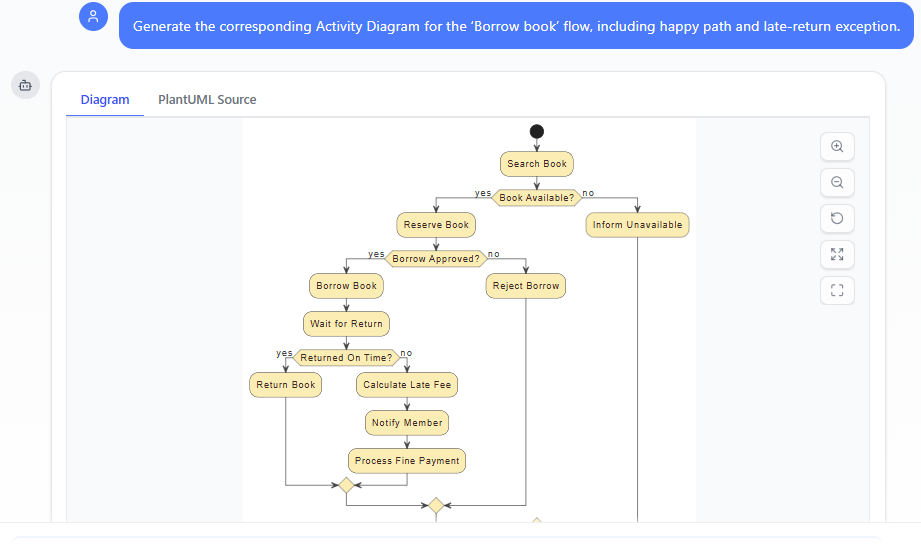
Generating a UML Activity Diagram with Visual Paradigm’s AI Chatbot - AI Step-Based Apps (The Guided Analyst) A growing library of over 50 purpose-built AI applications, including 10-step wizards, textual analysis tool (extracting classes, attributes, and relationships from unstructured requirements), Use Case Refinement Tool, Sequence Diagram Refiner, MVC Architecture Generator, Use Case to Activity Diagram Converter, and more.
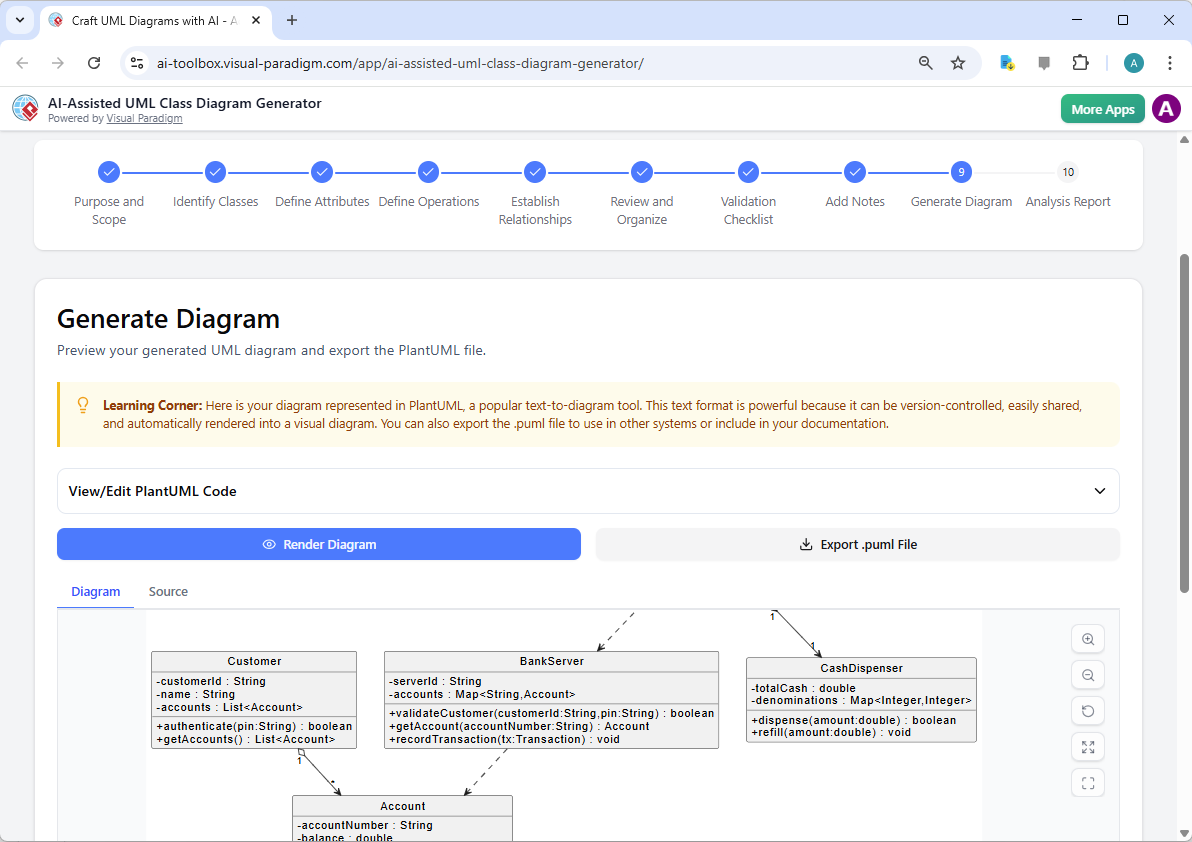
- Embedded Diagram Generator High-precision, standards-compliant generation embedded directly in the Visual Paradigm desktop environment—ideal for complex or specialized diagrams such as Timing, Package, or Deployment models. You can generate diagram and edit it on the fly.
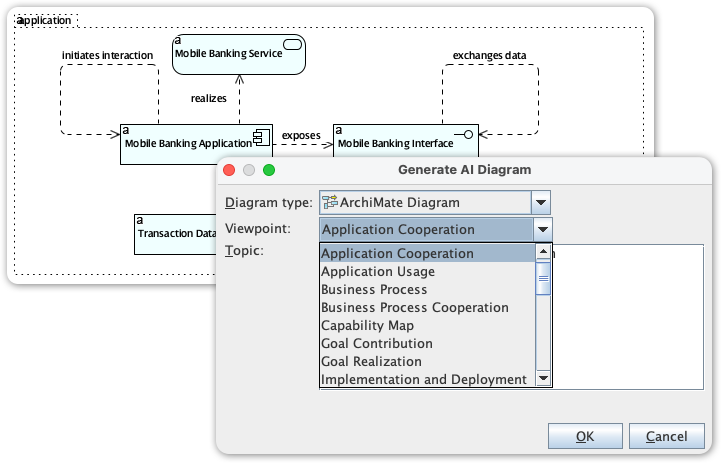
To generate an ArchiMate diagram with AI from within Visual Paradigm Desktop - AI Image Translator Localizes existing diagrams into over 50 languages while intelligently preserving shapes, connectors, layout integrity, and semantic meaning—perfect for global teams and international documentation.
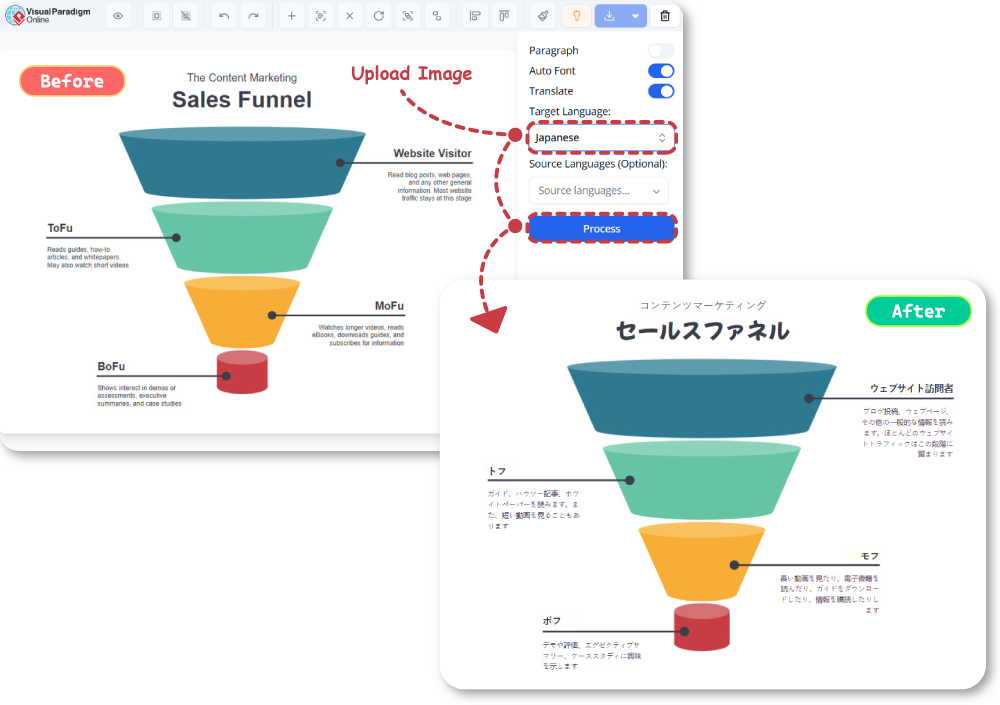
- Additional AI Capabilities Tools for problem/use case description generation, AI TOGAF tool, brainstorming, C4 model creation, report generation, code suggestions, flipbook tools, and architectural analysis round out the ecosystem.
By mastering these components, you will overcome the “blank canvas” paralysis, minimize design errors through built-in intelligence, and produce high-fidelity models ready for code engineering, database generation, team collaboration, and enterprise architecture alignment.
This module equips you with the conceptual foundation and tool awareness needed to harness AI as a true co-designer. In the chapters ahead, we apply these capabilities step-by-step across the full spectrum of UML modeling—from requirements discovery to deployment and beyond.
Let’s begin transforming how you design systems.