In fast-paced Agile and DevOps environments, traditional software architecture documentation often becomes outdated the moment code is committed. Yet, skipping documentation entirely leads to architectural drift, knowledge silos, and onboarding friction. The solution is moving toward “living documentation”—lightweight, version-controlled architecture artifacts integrated directly into development workflows.
The Core Challenges of Architecture Docs in Agile
Agile software delivery emphasizes working software, but long-term system maintainability requires clear structural blueprints. Modern engineering teams encounter common friction points when documenting architecture:
- Documentation Drift: Architecture models drawn in static image formats quickly fall out of sync with evolving codebases.
- High Maintenance Overhead: Updating complex architectural diagrams manually in traditional design tools takes time away from active feature delivery.
- Disconnected Toolchains: Visual models often live in isolated drawing applications, disconnected from developer environments, pull requests, and CI/CD pipelines.
Best Practices for Modern Architecture Documentation
To balance speed with structural clarity, high-performing software teams follow these core principles:
1. Embrace Architecture-as-Code (Diagrams-as-Code)
Treat system designs like source code. Storing textual diagram definitions (such as PlantUML, Mermaid, or Graphviz) alongside application code allows teams to track architectural changes in Git, perform code reviews on design updates, and automate rendering in documentation portals.
2. Maintain Multiple Abstraction Levels
Avoid trying to capture every implementation detail in a single visual model. Provide high-level system context views for product stakeholders, service/component diagrams for engineering leads, and detailed dynamic sequence flows for implementation developers.
3. Document Key Boundaries and Interfaces First
Focus documentation efforts where complexity is highest: system integration points, provided and required API contracts, microservice service boundaries, and external data pipelines.
4. Automate Diagram Creation with AI Tools
Rather than manually aligning boxes and arrows, use conversational modeling assistants to draft initial system blueprints directly from technical user stories and system requirements.
Streamlining Agile Docs with an AI UML Tool
Integrating an AI UML tool into your sprint planning and design cycles drastically reduces the friction of creating and updating living architectural docs.
The Visual Paradigm AI Diagramming Chatbot—a core element of the Visual Paradigm AI Ecosystem—helps Agile teams generate, refine, and maintain software architecture models using conversational text prompts.
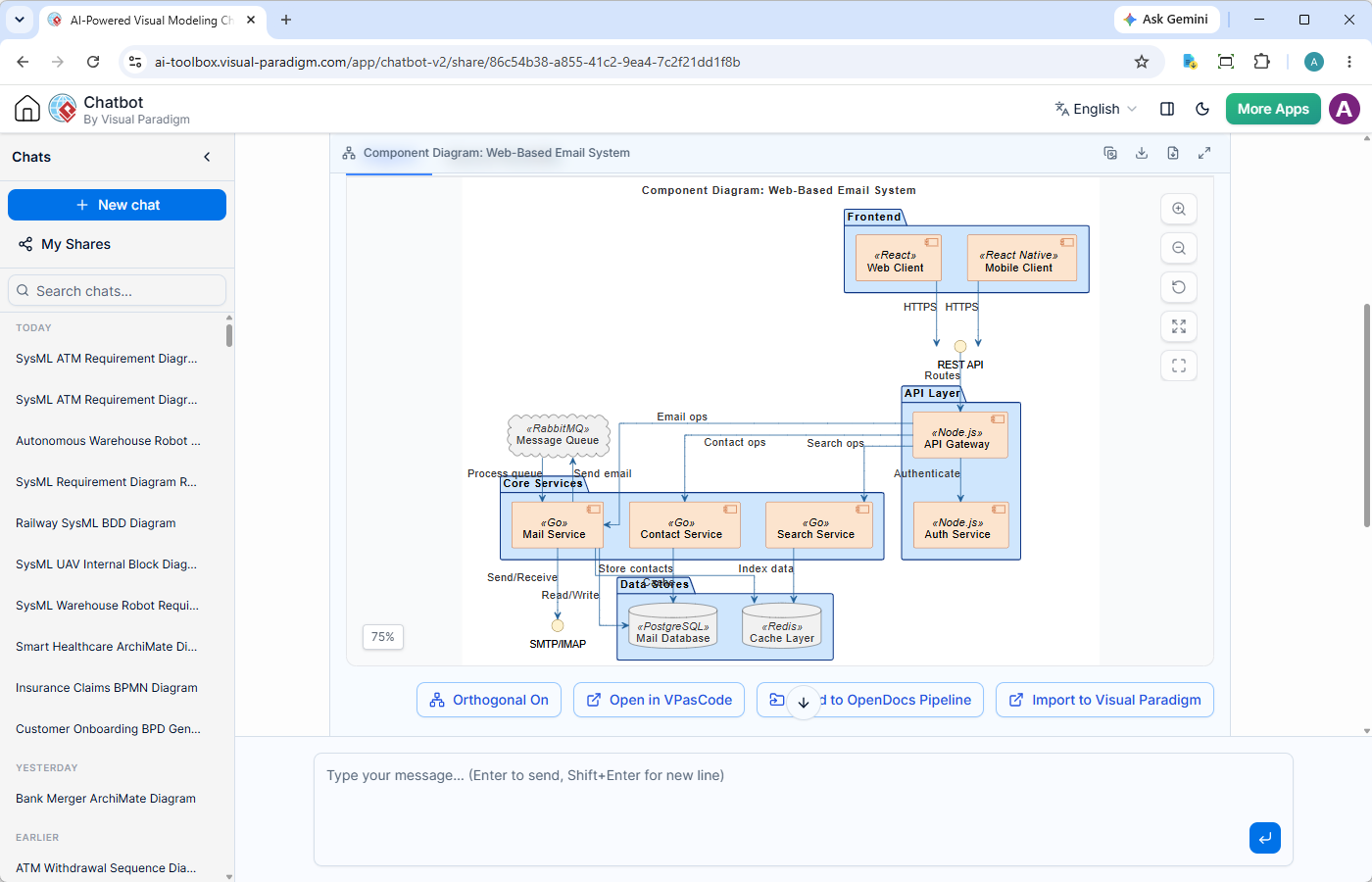
How Visual Paradigm AI Supports Living Documentation:
- Instant Diagram Generation: Convert system descriptions, architectural decision records (ADRs), or user stories into syntactically valid UML component diagrams, C4 models, and deployment views in seconds.
- Conversational Refinement: Rapidly update system structures during sprint planning sessions by asking the chatbot to add new modules, split components, or modify API dependencies.
- Multi-Notation Flexibility: Complement structural models with operational views using built-in AI activity diagram tool capabilities, sequence diagram generators, and business process modeling.
- High-Precision Model Engine: Powered by a specialized, highly trained model that minimizes syntax errors and semantic mistakes common in generic AI chat tools.
- Portable Text-Based Artifacts: Diagrams are generated in standard text formats, allowing developers to easily export code definitions, commit them to Git, or paste them into internal developer portals.
Connecting Architecture Docs to the Visual Paradigm Ecosystem
Visual Paradigm provides an integrated toolchain designed to bridge the gap between high-level architectural ideation and production DevOps workflows:
- Living Docs with OpenDocs: Send AI-generated models directly to Visual Paradigm OpenDocs to combine visual component diagrams with living API documentation and service specifications.
- Code-Level Control via VPasCode: Edit diagram code in VPasCode to maintain full control over architectural models.
- Collaborative Sprint Planning in VP Online: Share persistent chatbot session links or export models to VP Online for real-time team whiteboarding and architectural reviews.
- Code Traceability in VP Desktop: Import component blueprints into Visual Paradigm Desktop to link high-level architectural components directly to underlying implementation classes and executable packages.
Accelerate Your Agile Architecture Workflow Today
Combining Agile practices with lightweight, AI-assisted modeling ensures your system architecture stays accurate, accessible, and aligned with technical debt goals.
Get started with a free trial of the AI Diagramming Chatbot. Full access is included with both VP Online Deluxe Edition and VP Desktop Professional Edition licenses.