

Enterprise Architecture with ArchiMate: Aligning Business Goals with Technology Layers Using AI-Driven Viewpoints and TOGAF ADM Integration
While UML excels at detailed software system specification and the C4 model provides a developer-friendly zoomable hierarchy of technical architecture, many organizations—especially large enterprises—require a broader lens that connects business strategy to technology delivery. This is the domain of enterprise architecture (EA), where frameworks like ArchiMate (the Open Group’s open standard for EA modeling) and TOGAF (The Open Group Architecture Framework) play central roles.
ArchiMate offers a lightweight yet expressive language with three core layers and cross-cutting aspects:
- Business Layer — strategy, motivation, organization, processes, services, products
- Application Layer — application components, interfaces, functions, services, data objects
- Technology Layer — infrastructure nodes, devices, paths, artifacts, system software
These layers are linked through realization, serving, triggering, flow, association, and specialization relationships, enabling traceability from high-level business drivers down to running infrastructure.
TOGAF ADM (Architecture Development Method) provides a phased process (Preliminary → Architecture Vision → Business Architecture → Information Systems Architectures → Technology Architecture → Opportunities & Solutions → Migration Planning → Implementation Governance → Architecture Change Management) that many organizations follow to govern enterprise transformation.
Manually creating ArchiMate viewpoints that span these layers and align with TOGAF phases is extremely labor-intensive: viewpoint selection, element consistency, relationship traceability, and synchronization with detailed UML/C4 models often lead to silos or outdated documentation.
Visual Paradigm’s AI ecosystem integrates ArchiMate modeling, viewpoint generation, and TOGAF alignment directly into the same conversational workflow used throughout the course. You describe business goals, processes, or strategic intent—or reference existing UML/C4 models—and the AI produces consistent, layered ArchiMate viewpoints with built-in traceability and TOGAF phase awareness.
How to Create AI-Driven ArchiMate Viewpoints with TOGAF Alignment
-
Describe Business Context, Goals, or Desired Viewpoint In the AI Chatbot (or via dedicated ArchiMate/TOGAF apps in the Innovation Hub), provide a natural-language starting point:
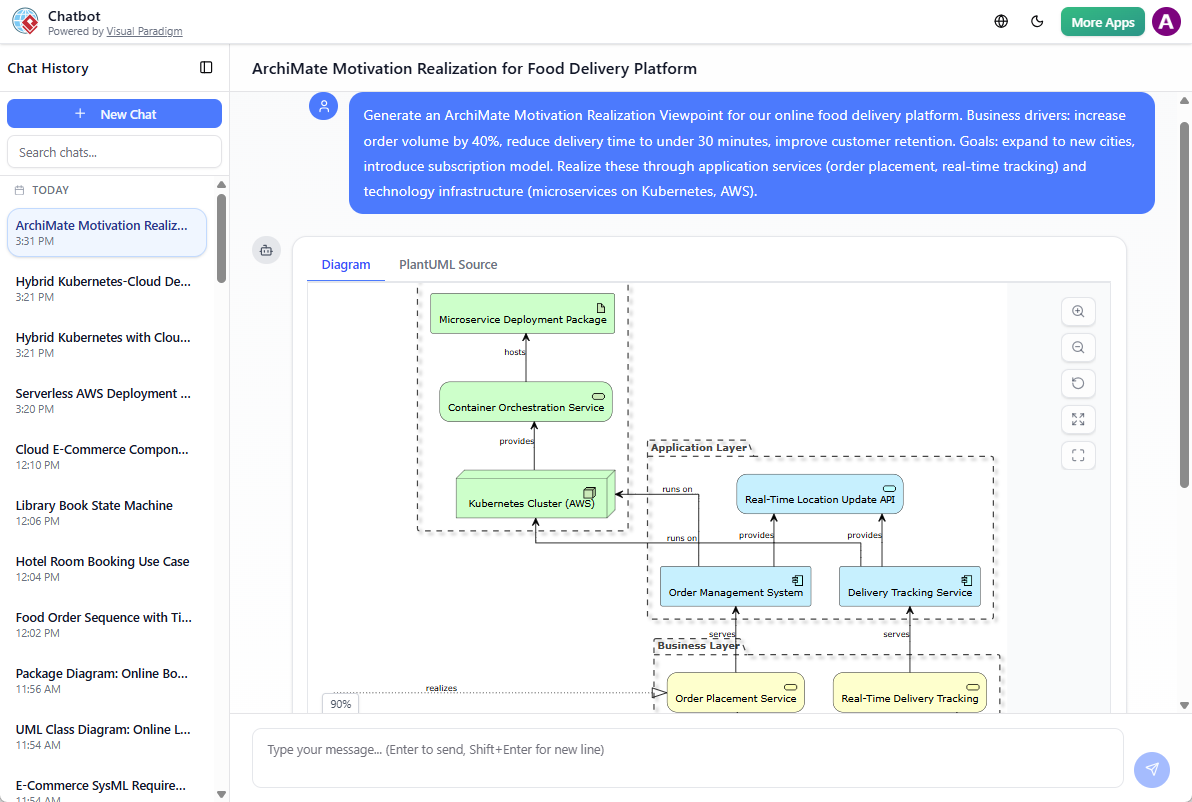
- “Generate an ArchiMate Motivation Realization Viewpoint for our online food delivery platform. Business drivers: increase order volume by 40%, reduce delivery time to under 30 minutes, improve customer retention. Goals: expand to new cities, introduce subscription model. Realize these through application services (order placement, real-time tracking) and technology infrastructure (microservices on Kubernetes, AWS).”
- “Create a layered ArchiMate viewpoint showing how the ‘Order Fulfillment’ business process is realized by application components (Order Service, Payment Service, Notification Service) and deployed on AWS EKS, RDS, and SQS. Include business actors (Customer, Restaurant, Driver) and triggering flows.”
- “Produce a TOGAF-aligned Application Cooperation Viewpoint for the ride-sharing system, showing how the Ride Matching application service serves the ‘Match Passenger & Driver’ business process, is realized by microservices, and depends on external Map Provider and Payment Gateway services.”
-
AI Generates Targeted, Traceable ArchiMate Viewpoints The output is one or more purpose-built viewpoints (selected based on your description).
- Business Process Viewpoint
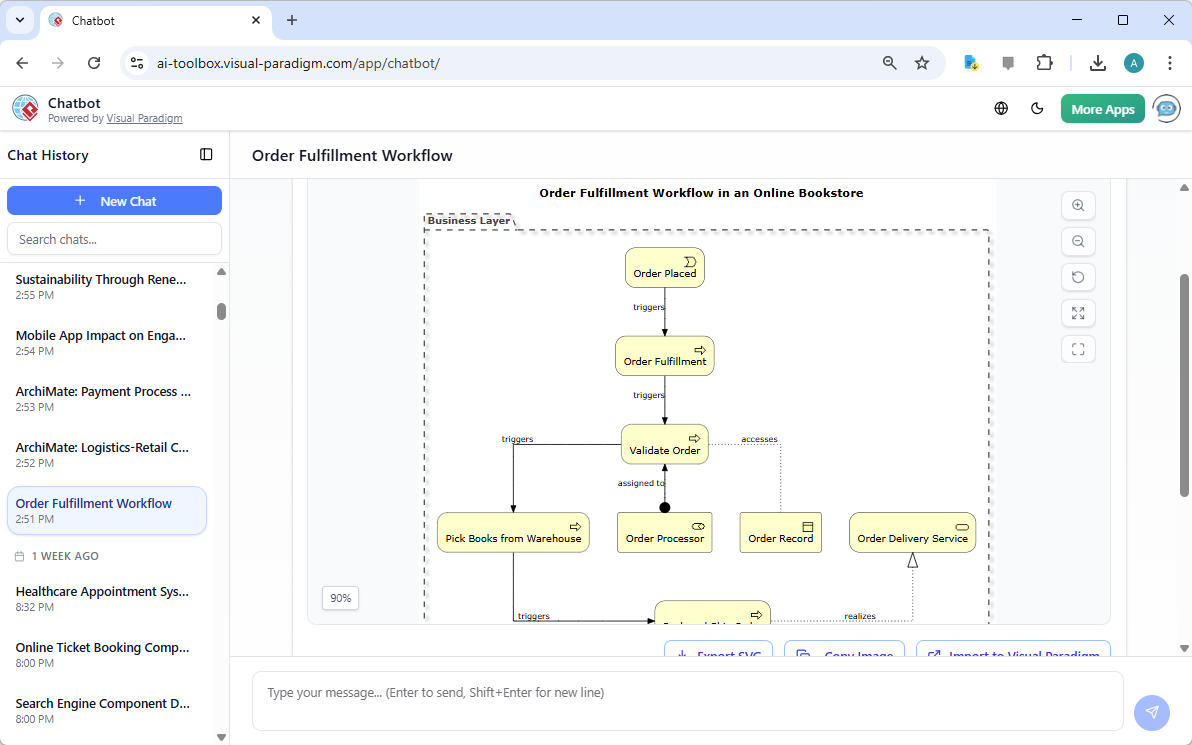
- Business Process Cooperation Viewpoint
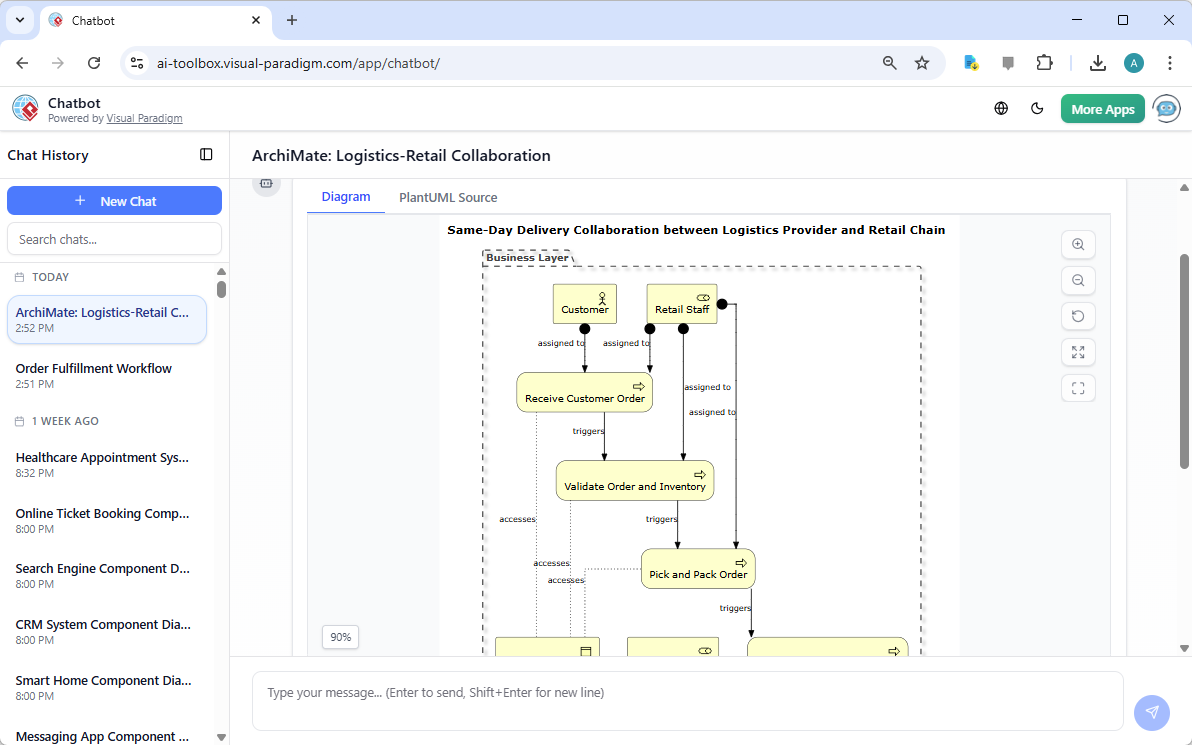
- Business Process Realization Viewpoint
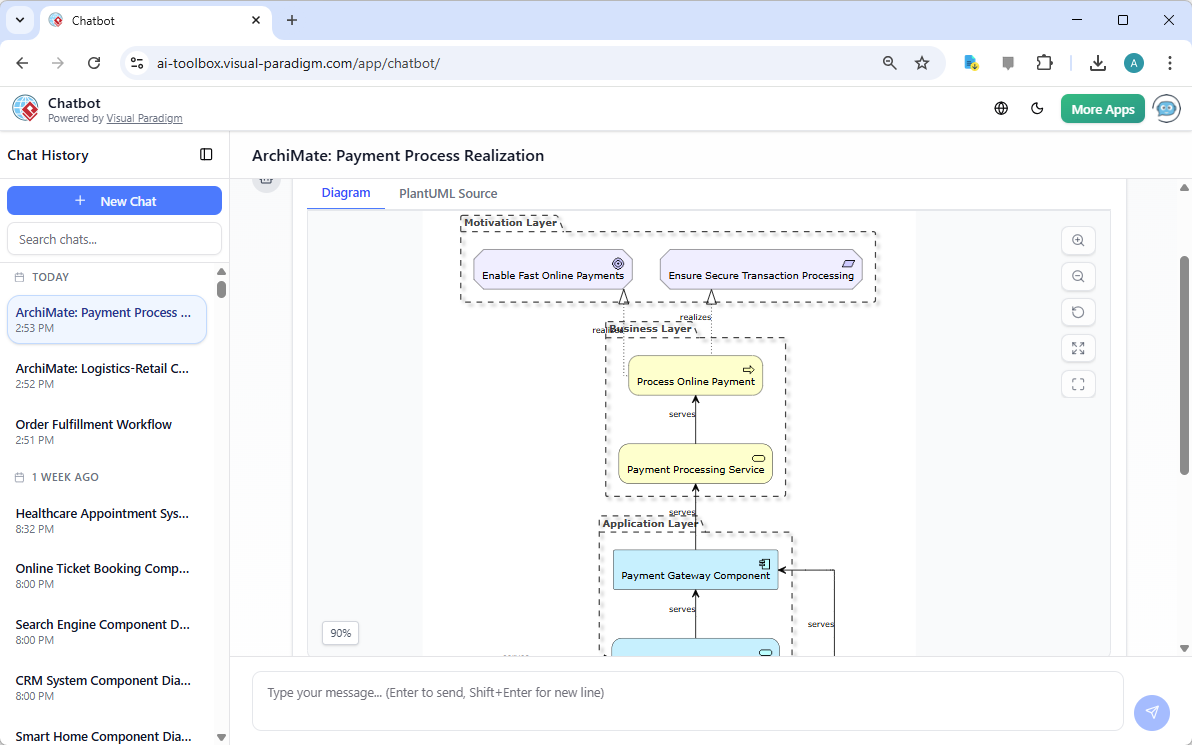
- Goal Contribution Viewpoint
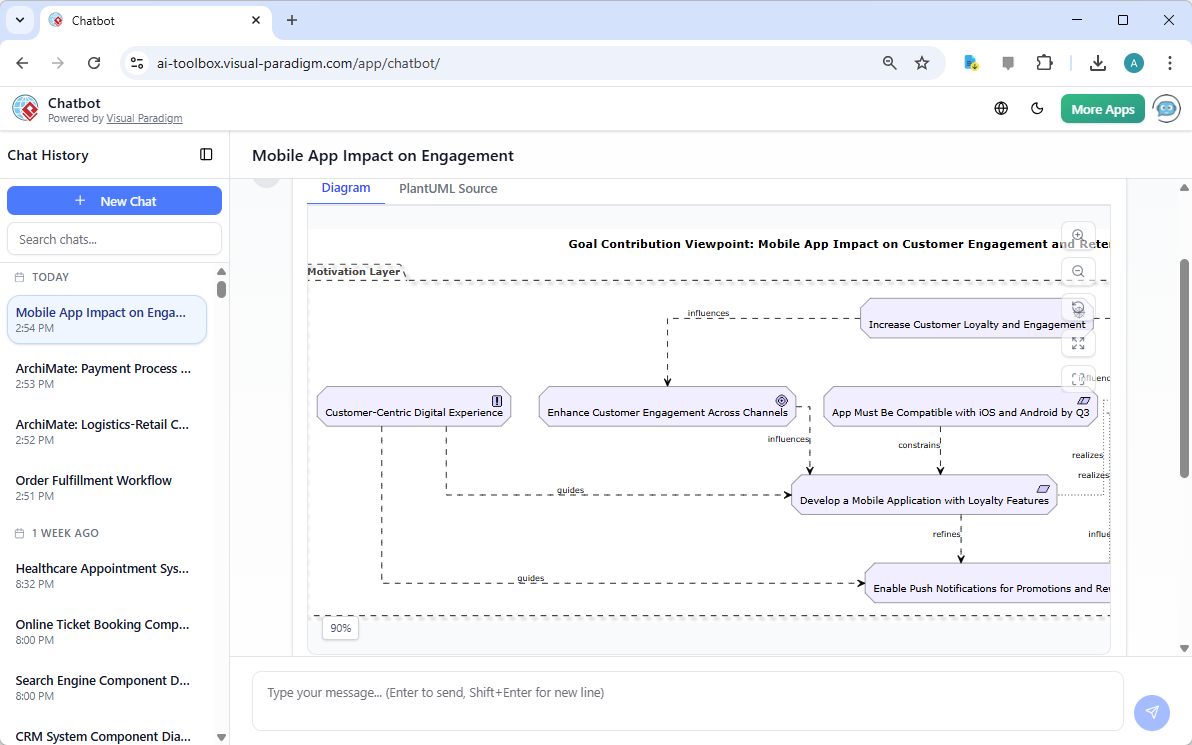
- Goal Realization Viewpoint
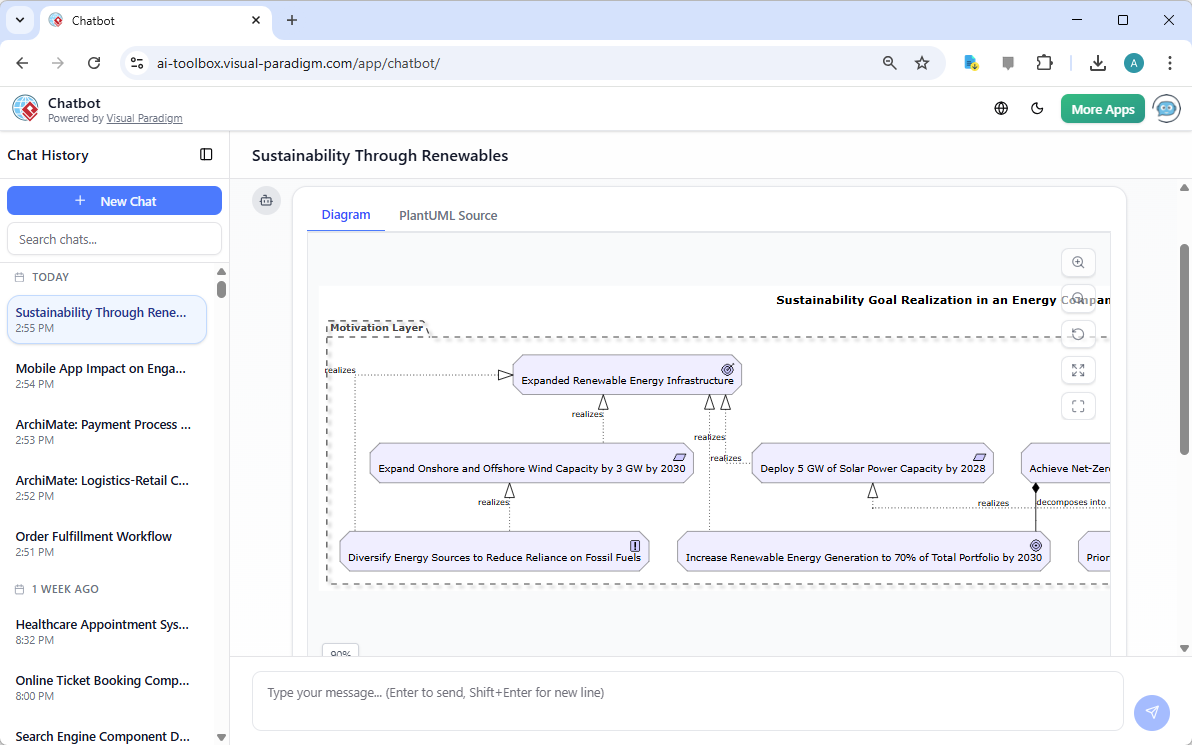
- Strategy Viewpoint
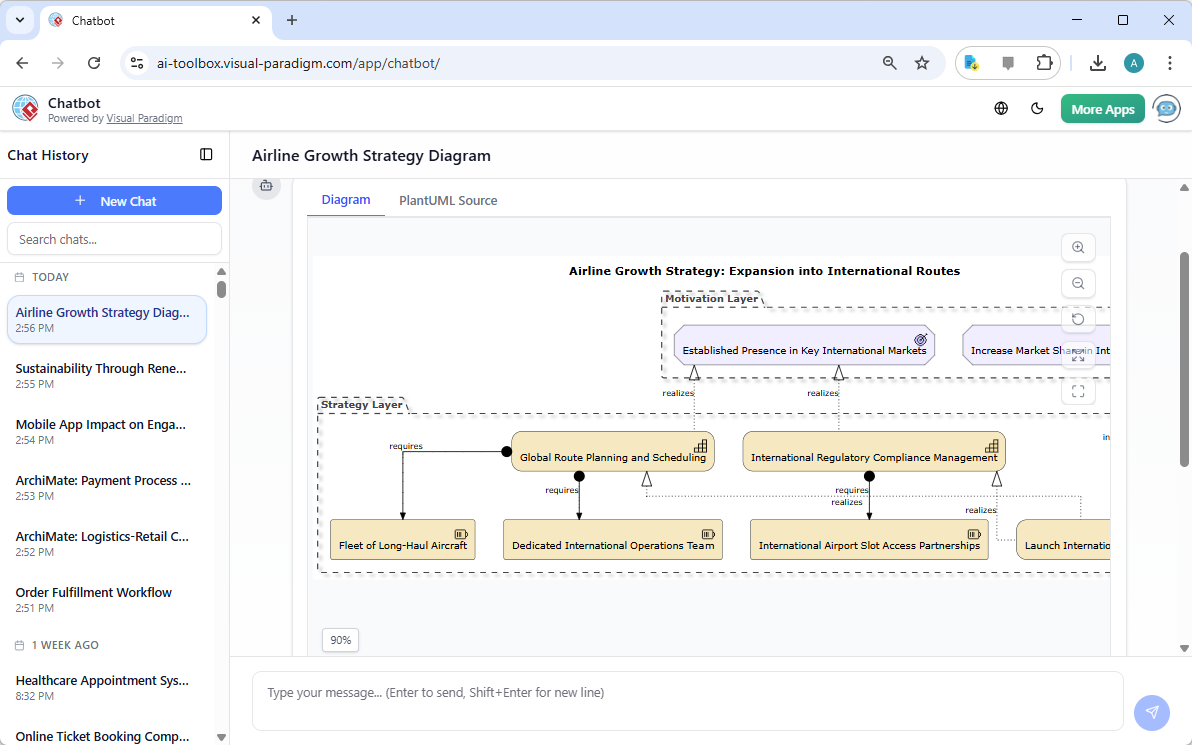
- Organization Viewpoint
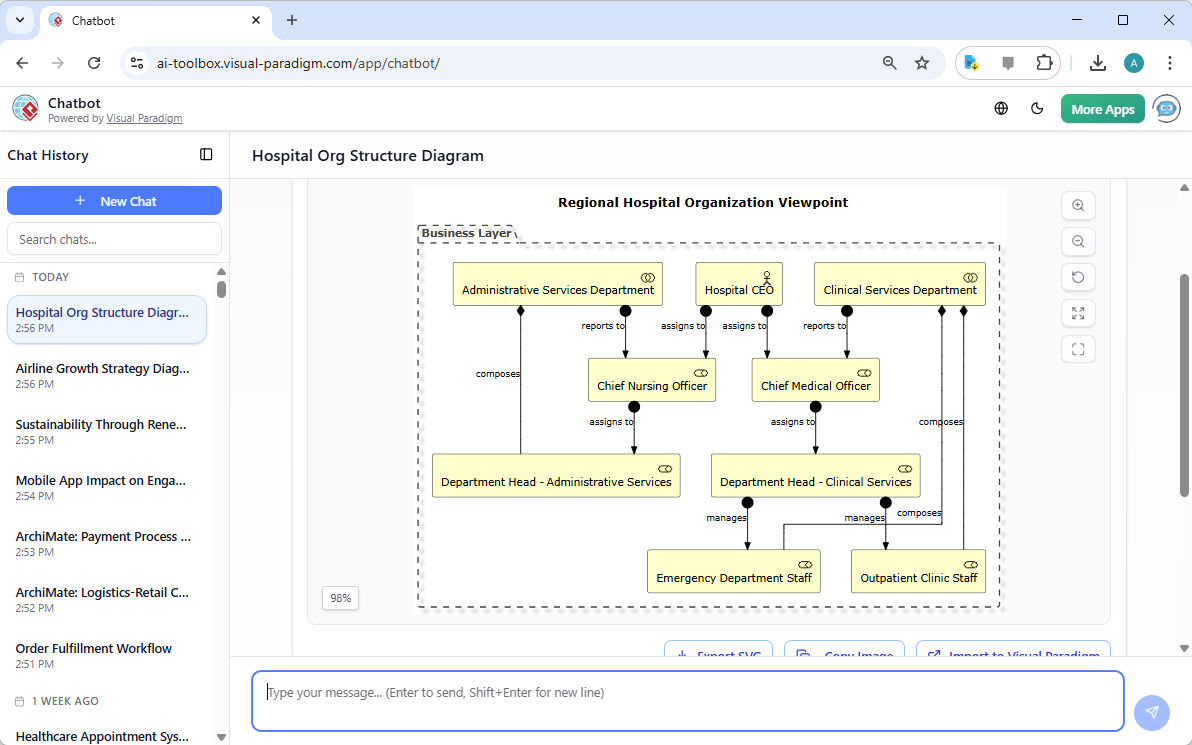
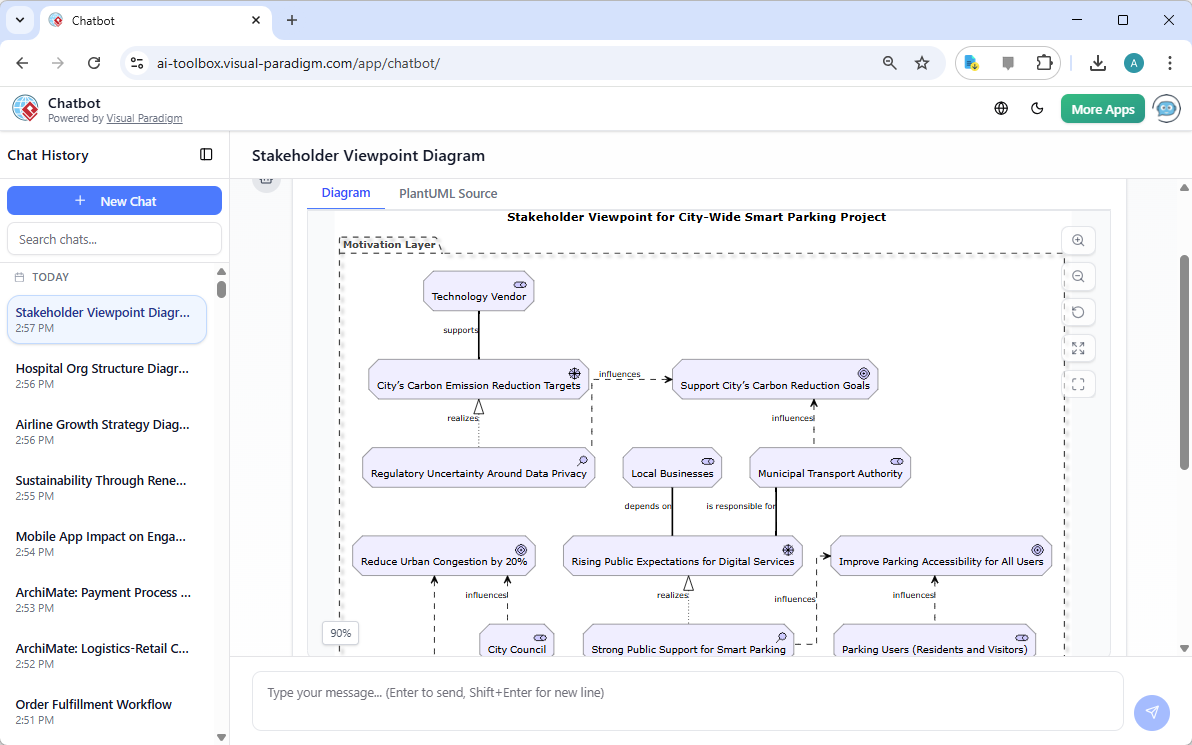
- Stakeholder Viewpoint
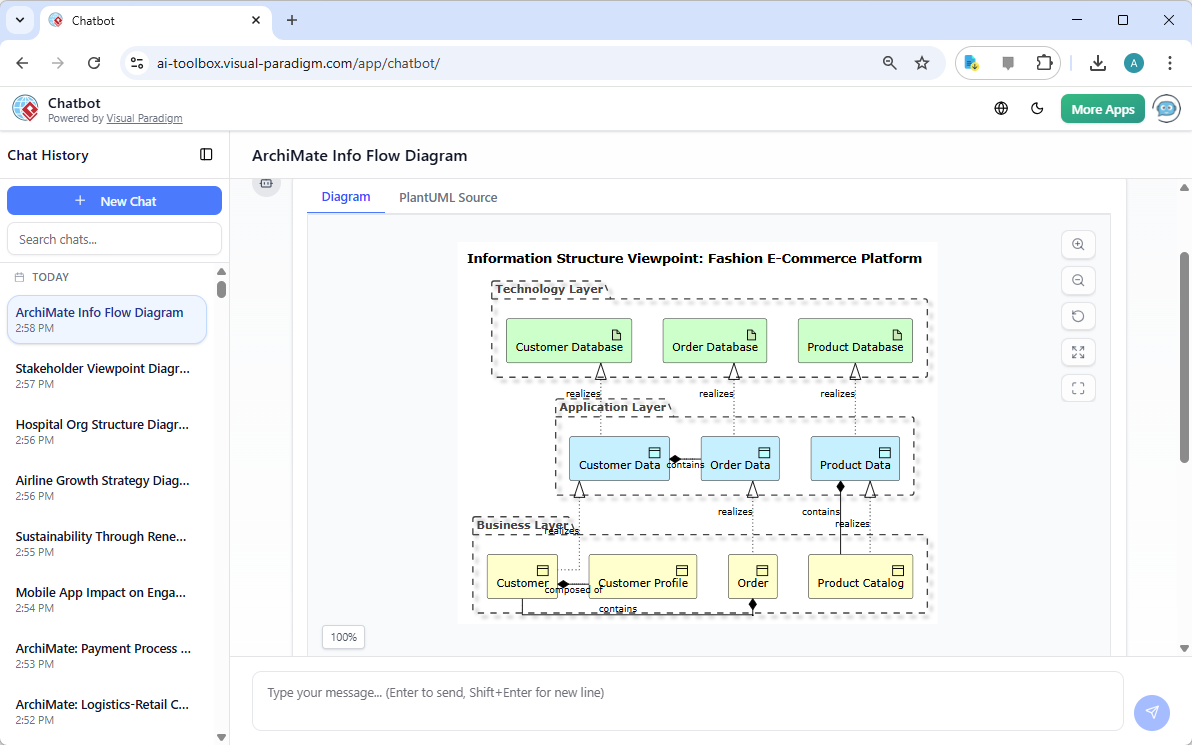
- Information Structure Viewpoint
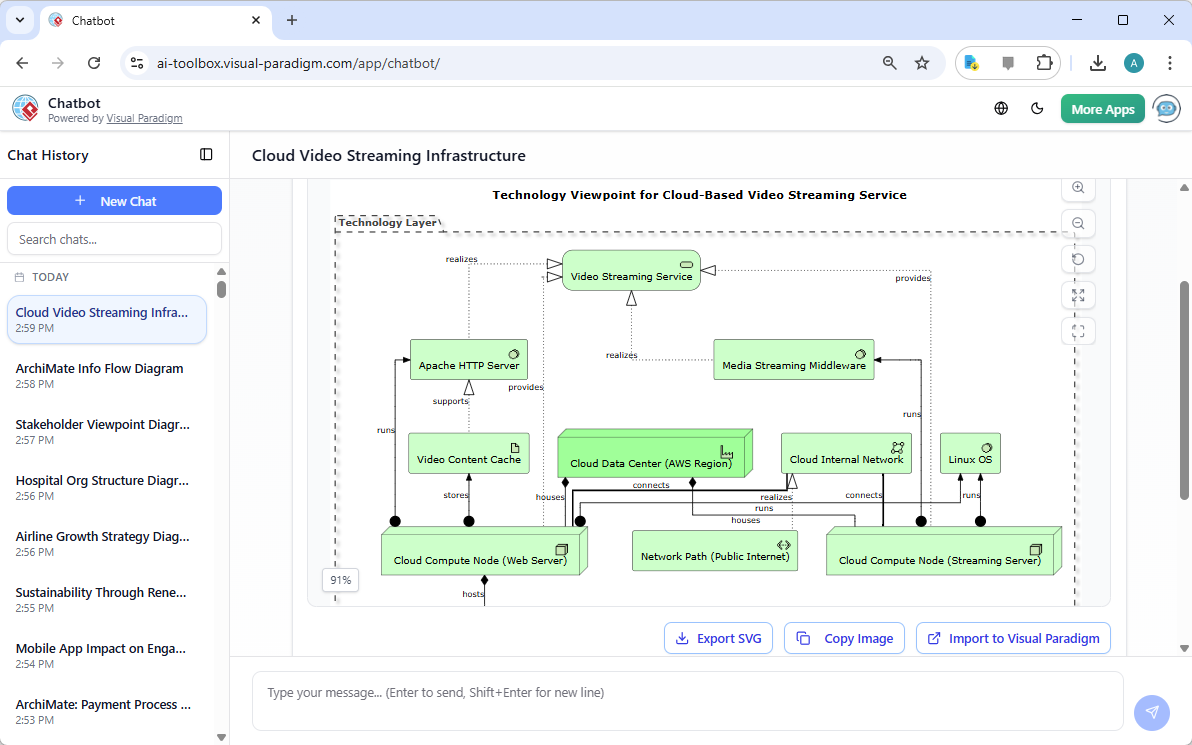
- Technology Viewpoint
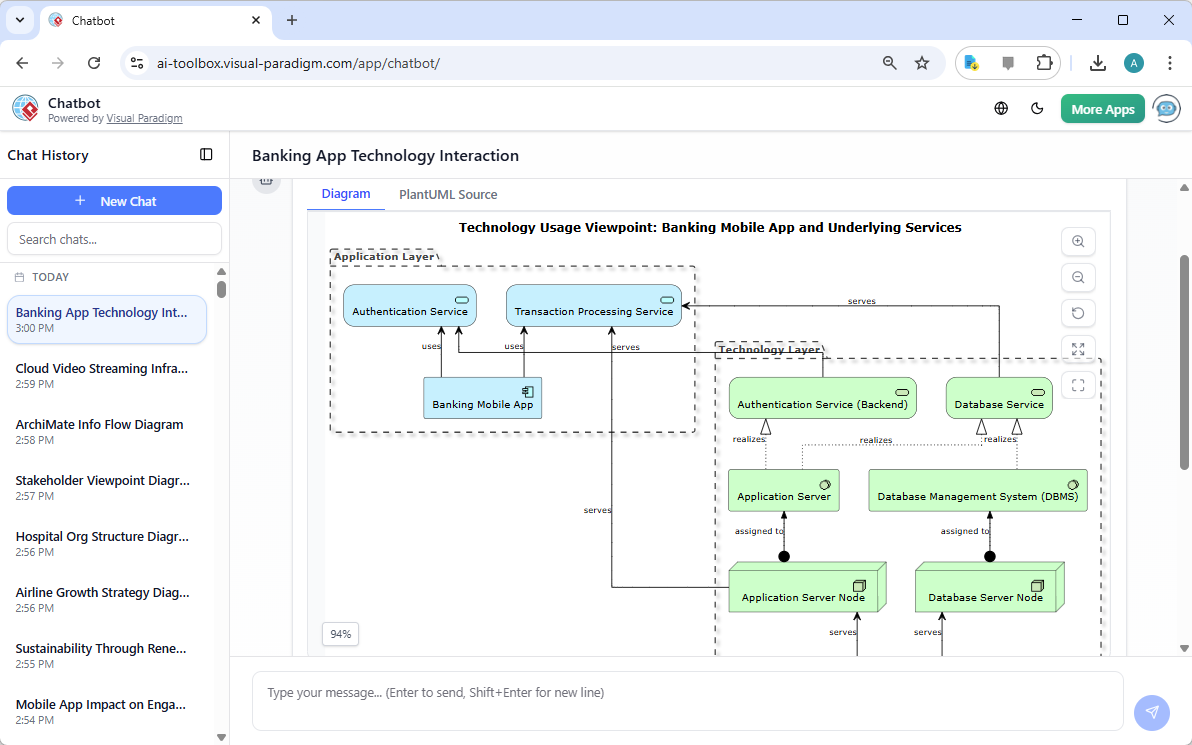
- Technology Usage Viewpoint
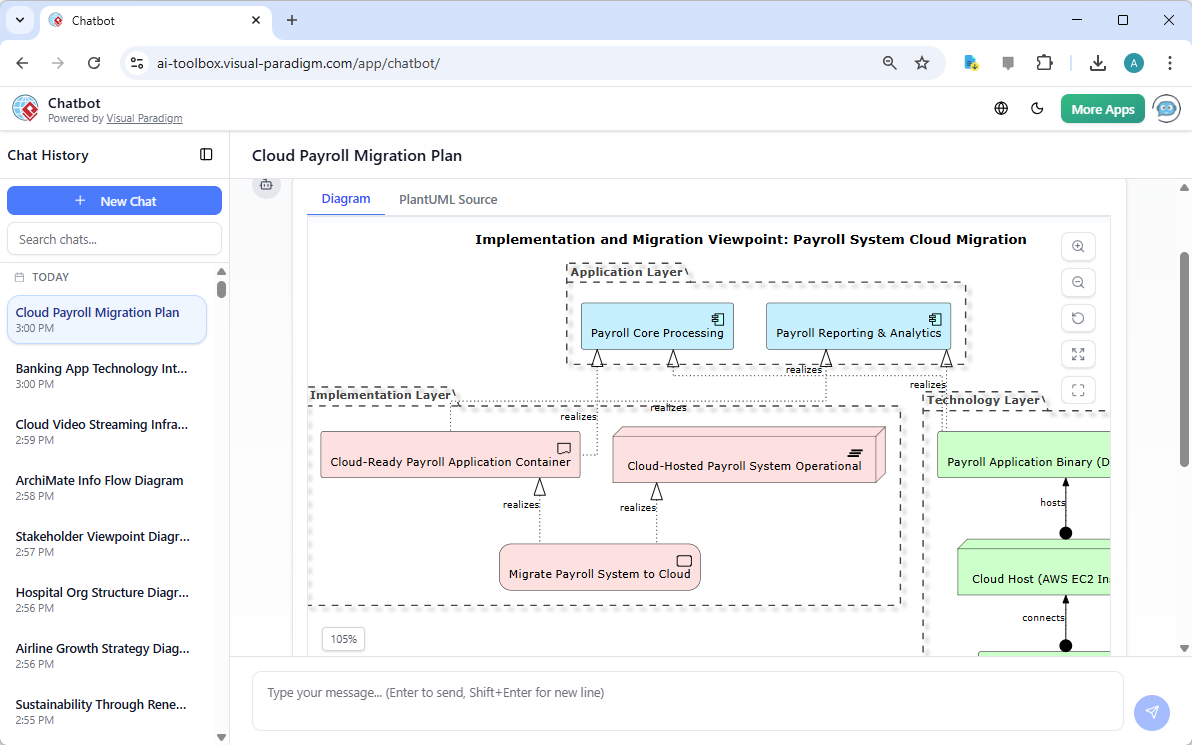
- Implementation and Migration Viewpoint
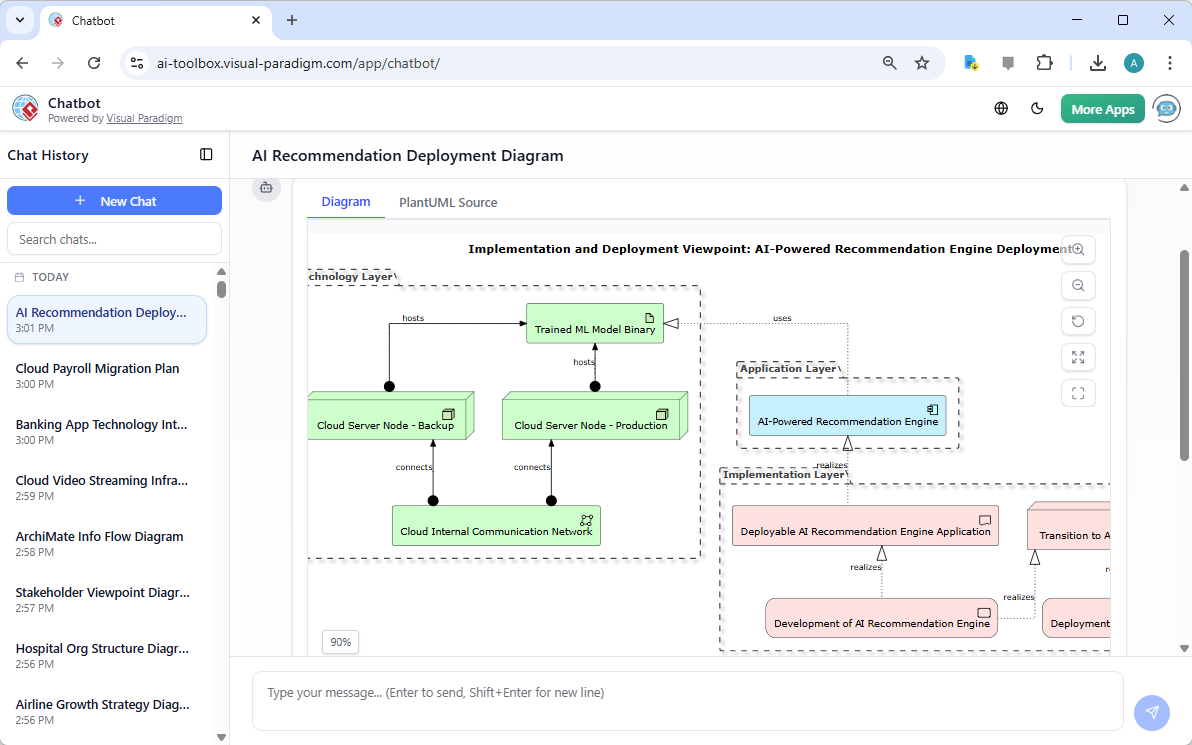
- Implementation and Deployment Viewpoint
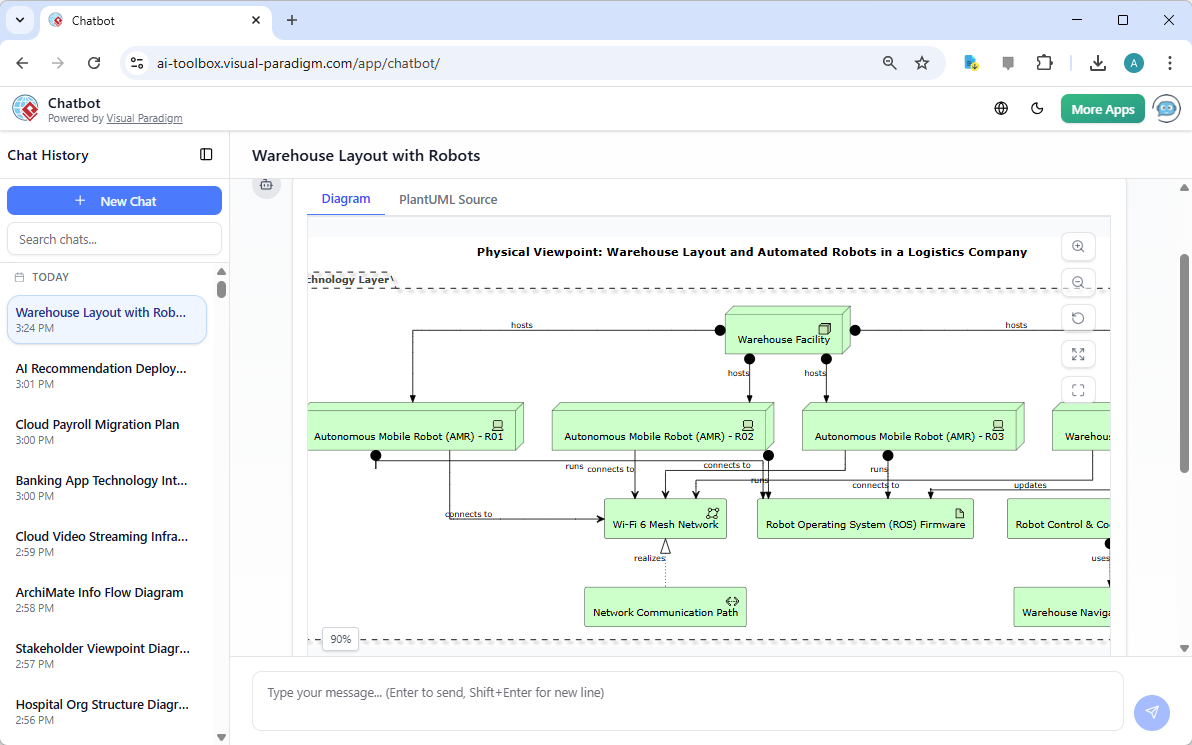
- Physical Viewpoint
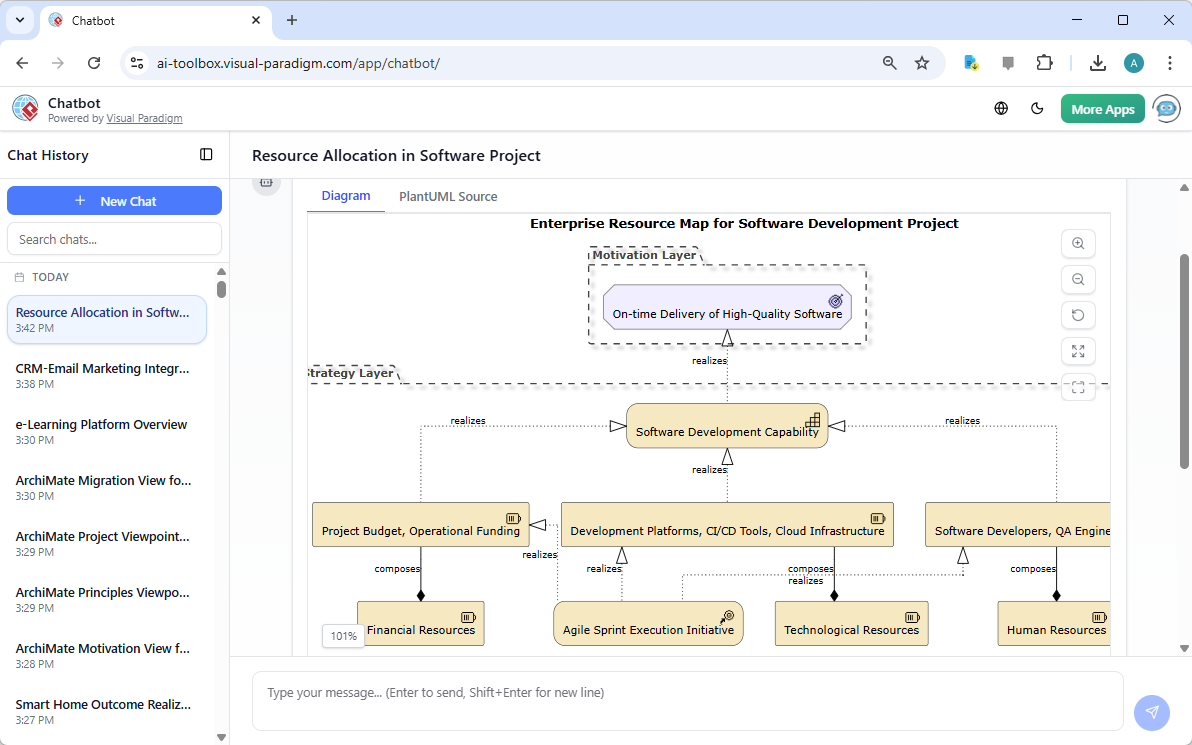
- Resource Map Viewpoint
- Capability Map Viewpoint
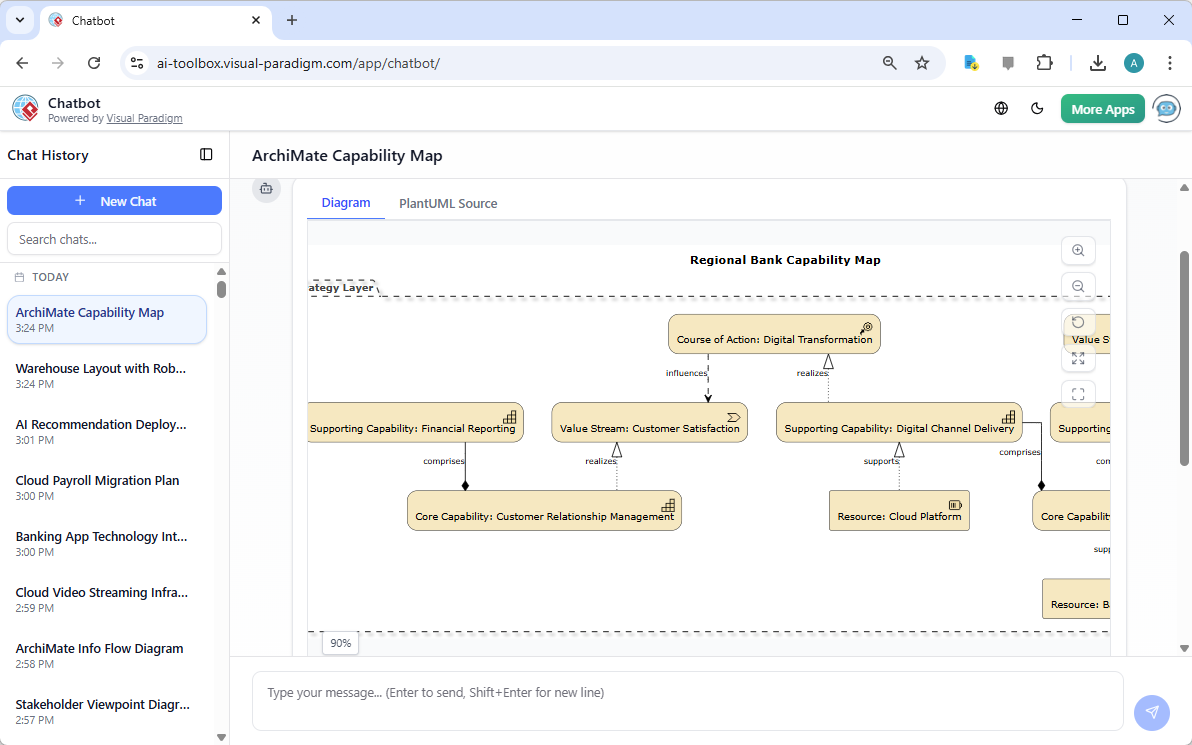
- Application Usage Viewpoint
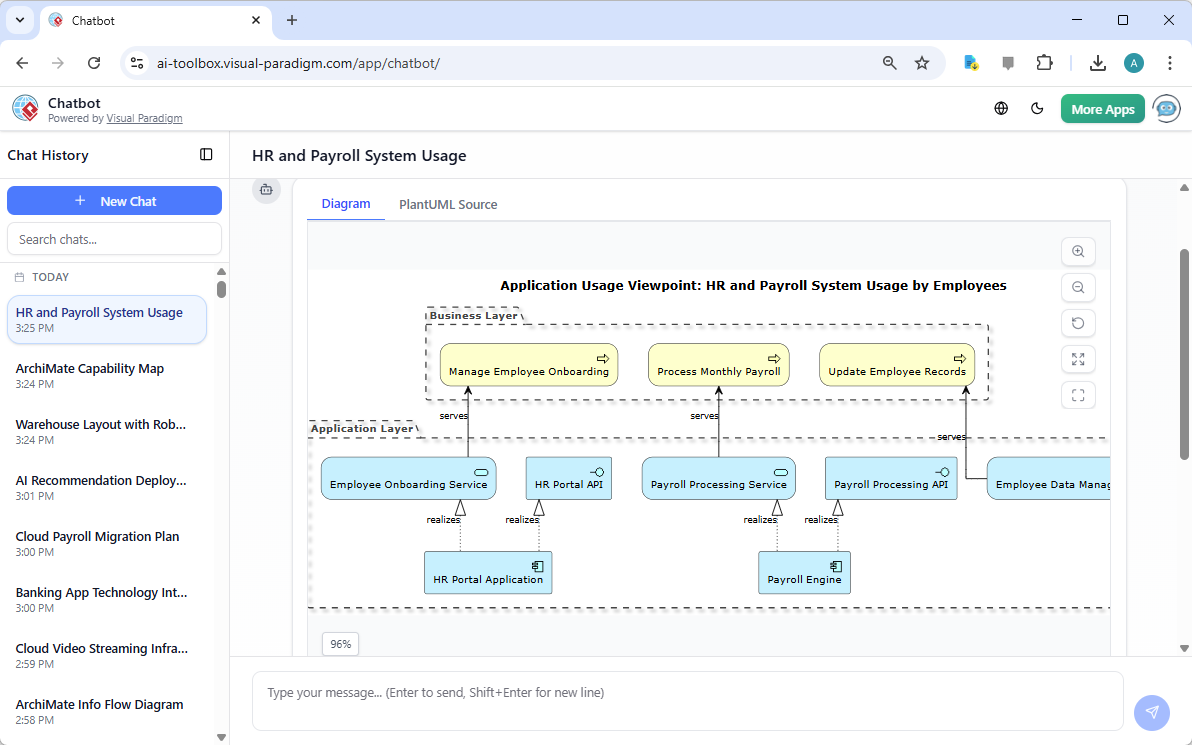
- Application Cooperation Viewpoint
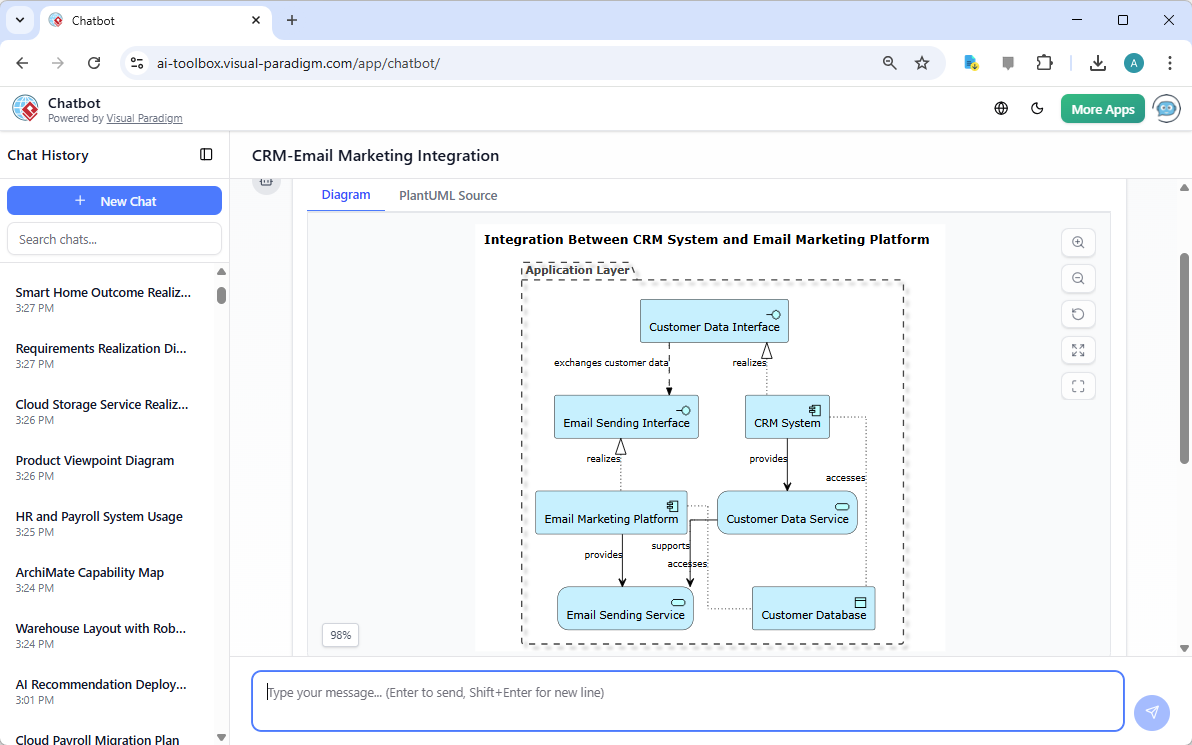
- Product Viewpoint
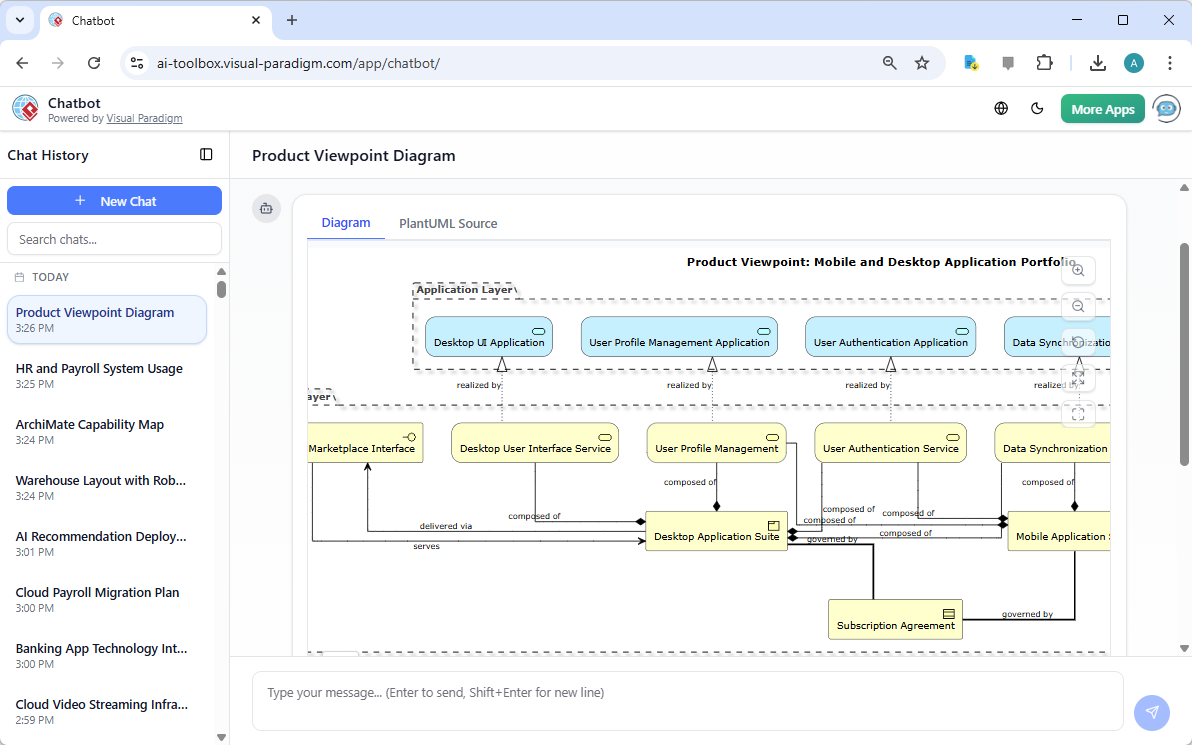
- Service Realization Viewpoint
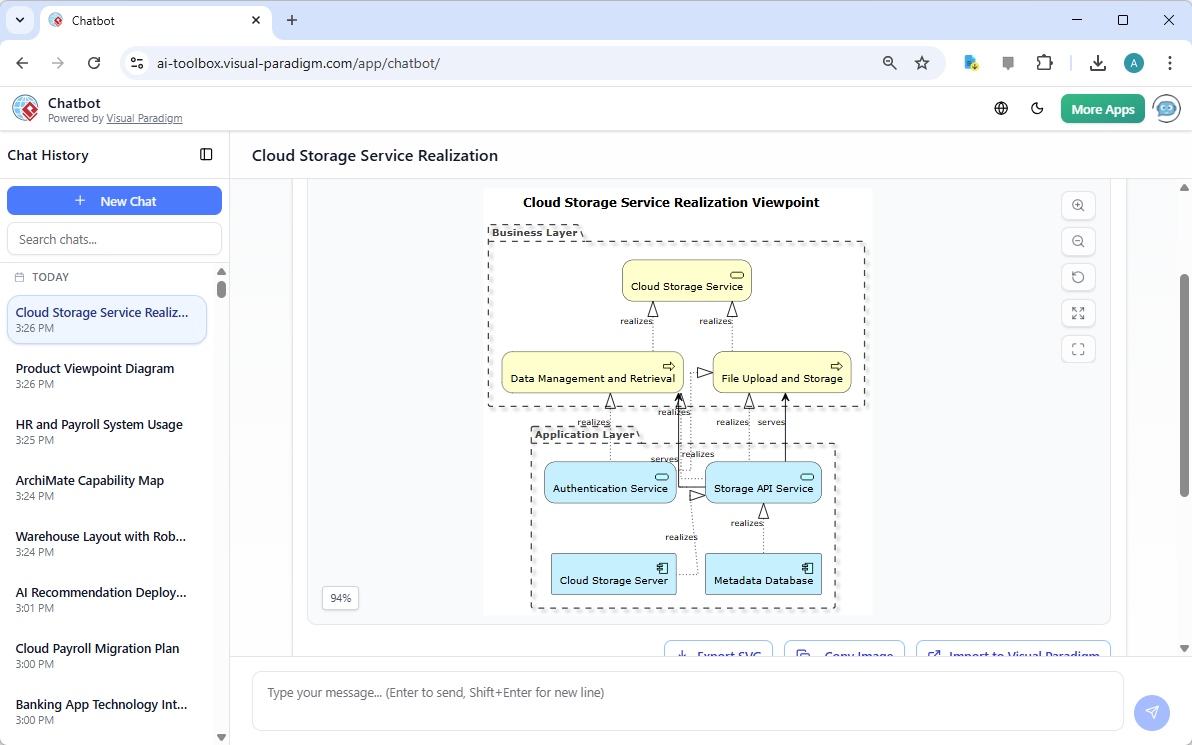
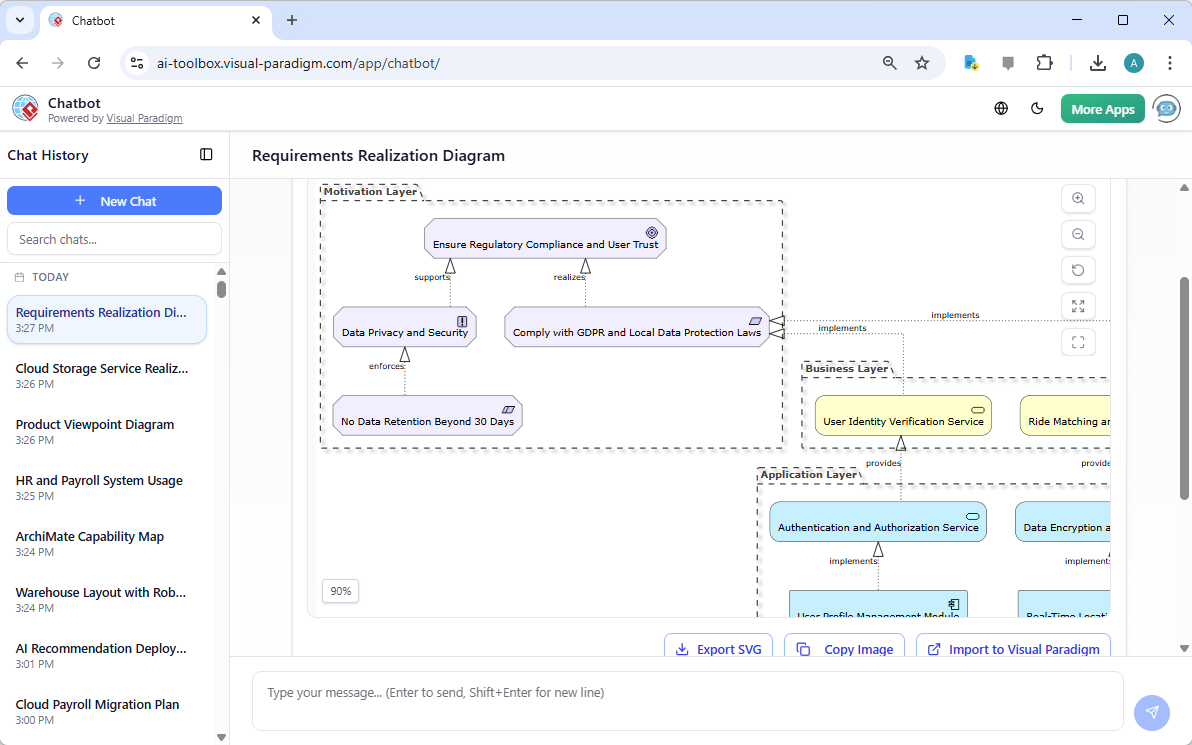
- Requirements Realization Viewpoint
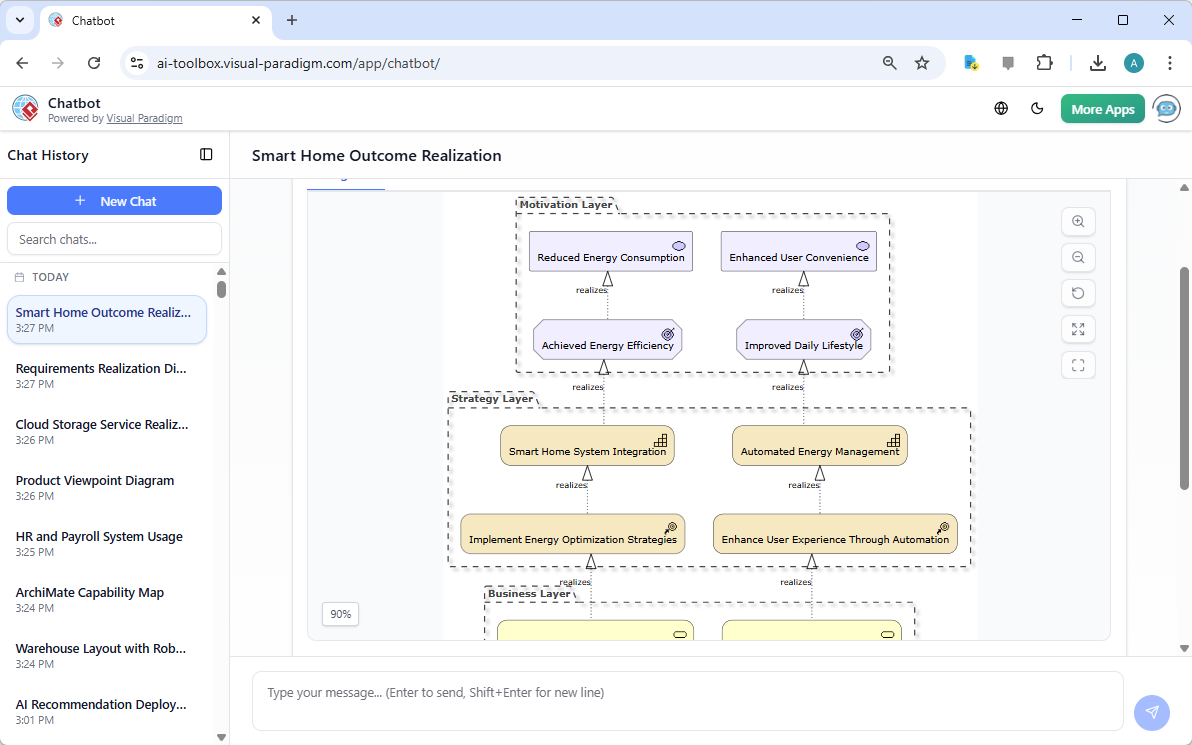
- Outcome Realization Viewpoint
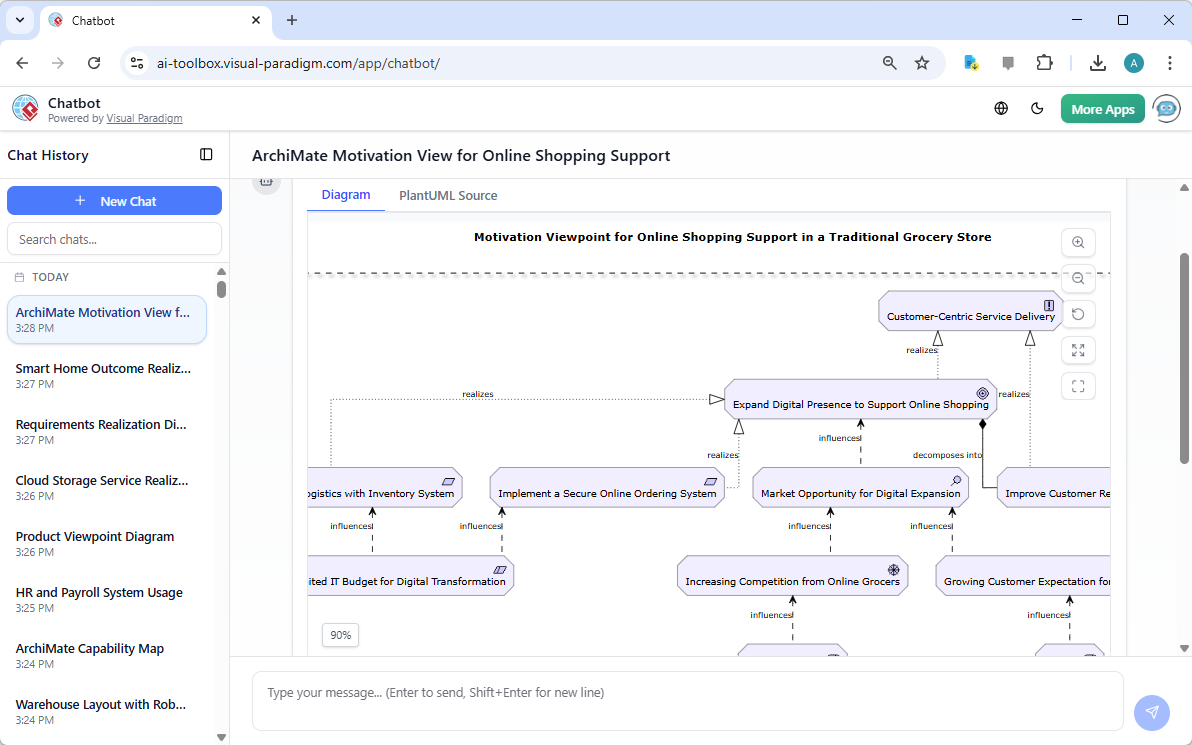
- Motivation Viewpoint
- Principles Viewpoint
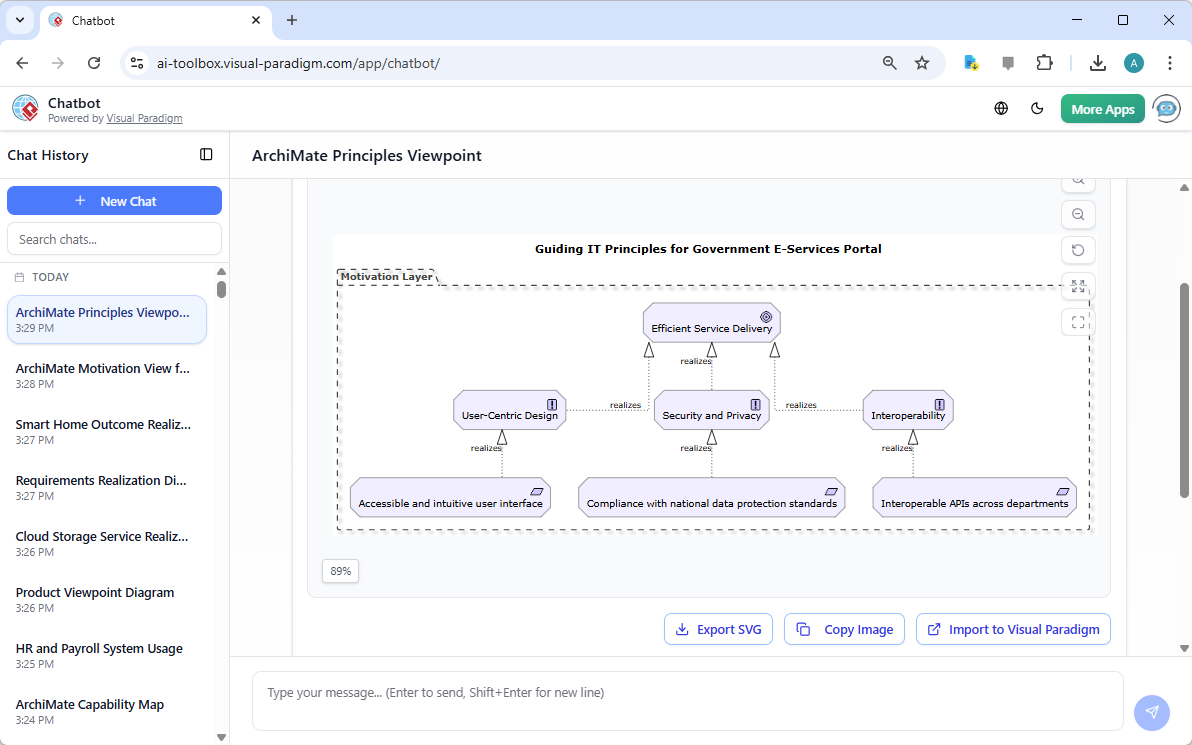
- Project Viewpoint
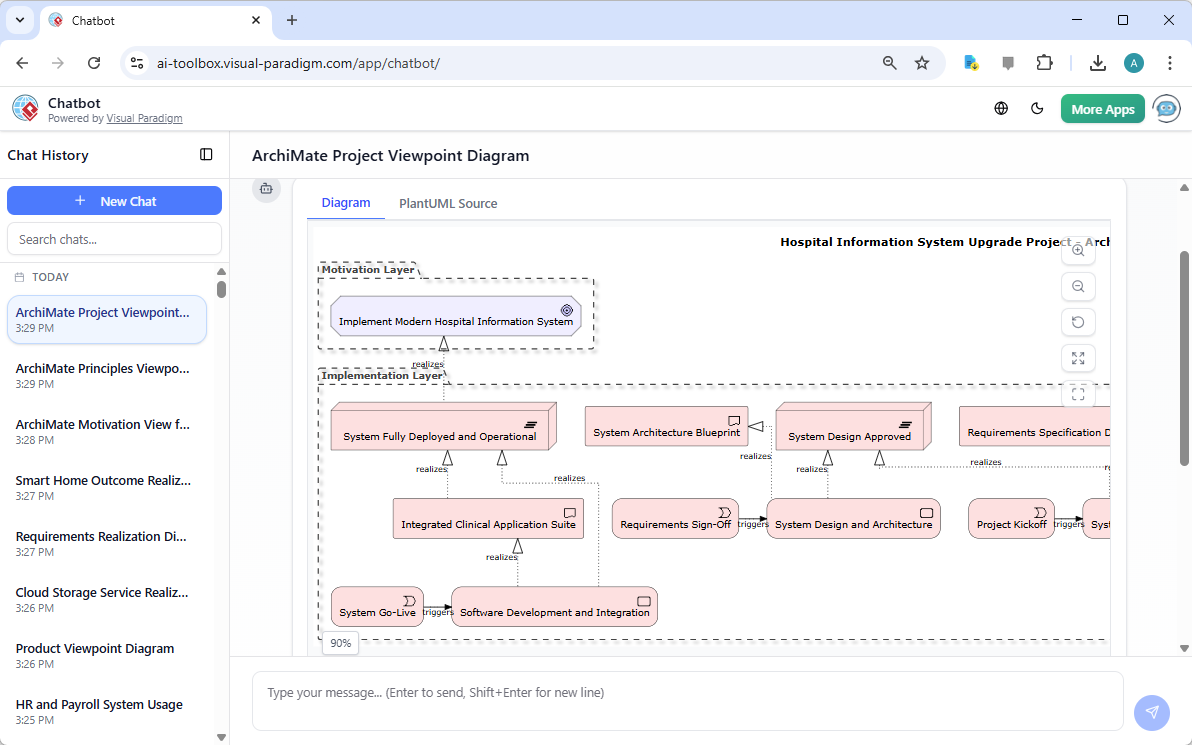
- Migration Viewpoint
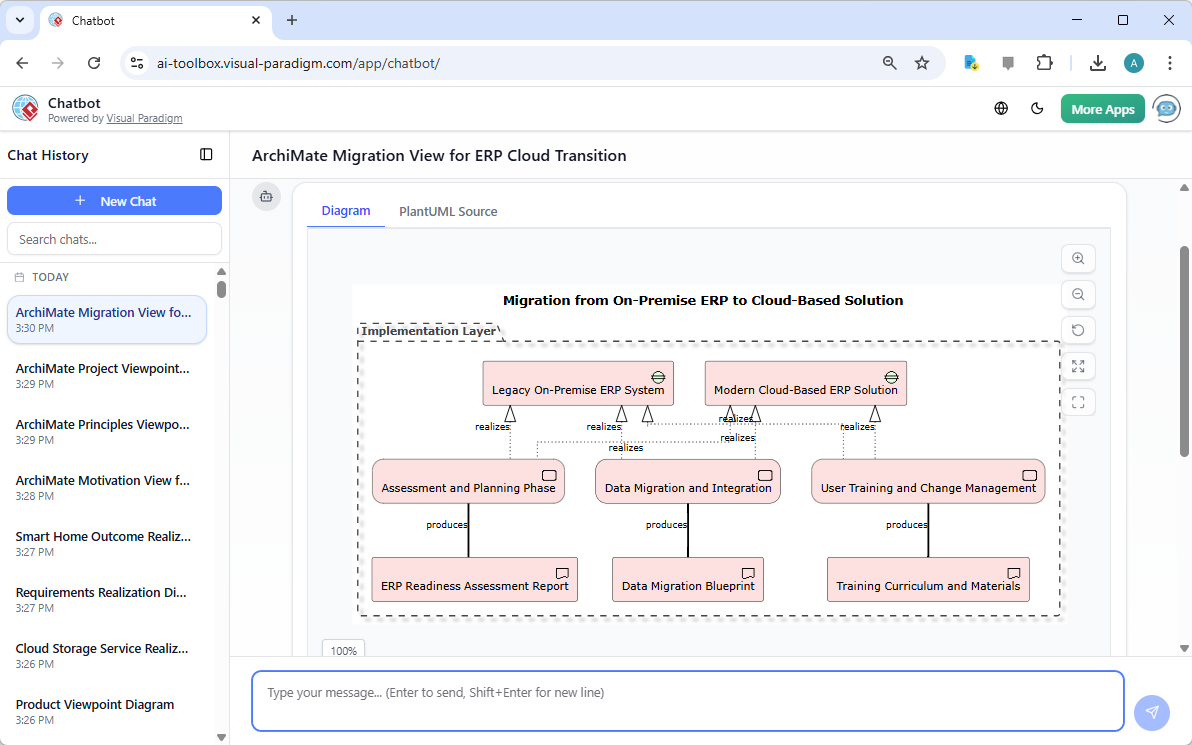
- Introductory Viewpoint
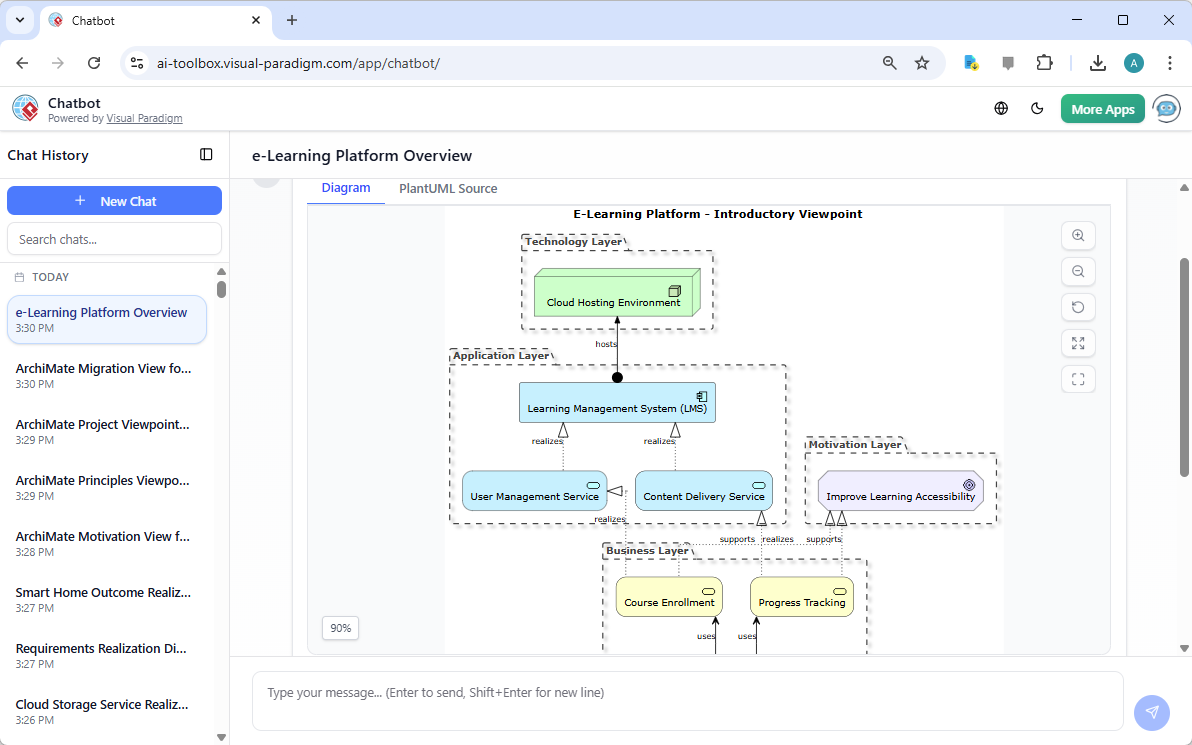
All elements use correct ArchiMate 3.x notation (rounded rectangles, diamonds, circles, etc.), standard colors (yellow business, blue application, green technology), and appropriate relationship types with directionality.
- Business Process Viewpoint
-
Iterative Refinement & Critique Integration Refine naturally and request integrity checks:
- “Add a new business driver: regulatory compliance for data privacy. Show how GDPR requirements are realized by encryption services in the Technology layer.”
- “Create a Gap Analysis Viewpoint comparing current vs. target architecture for migrating from monolith to microservices.”
- “Perform an architectural review: are there any missing realization relationships or orphaned business capabilities?”
- “Align this with TOGAF Phase E – Opportunities & Solutions: suggest migration increments.”
- “Generate the corresponding Stakeholder Viewpoint for the CFO focusing on cost reduction goals.”
Diagram Touch-Up and cross-model synchronization keep everything consistent—no manual relinking required.
Why This AI-Driven ArchiMate + TOGAF Integration Matters
| Challenge in Traditional EA Modeling | AI-Powered ArchiMate/TOGAF Advantage |
|---|---|
| Disconnected business and IT views | End-to-end realization chains from motivation to infrastructure |
| Viewpoint overload (hundreds possible in ArchiMate) | AI suggests and generates only relevant viewpoints |
| Traceability to detailed UML/C4 models is manual | Automatic back-links and consistency enforcement |
| TOGAF ADM phases hard to operationalize | Viewpoints explicitly tagged to ADM phases |
| Slow iteration during strategy changes | Conversational updates across layers and phases |
| Enterprise architects spend most time on drawing | AI handles notation, layout, relationship logic |
Practical Applications & Best Practices
- Strategy-to-Execution Alignment — Show executives how technology investments realize business outcomes
- Transformation Roadmaps — Use Gap/Plateau/Target viewpoints for TOGAF Phase E migration planning
- Governance & Compliance — Prove coverage of regulatory drivers (GDPR, PCI-DSS, ISO 27001)
- Portfolio Rationalization — Identify redundant application components or overlapping business services
- Prompting Tips:
- Specify viewpoint by name: “Motivation Realization Viewpoint”, “Application Usage Viewpoint”
- Reference business language: “drivers”, “goals”, “capabilities”, “value streams”
- Ask for phase alignment: “TOGAF Phase C viewpoint”
This capability closes the loop between software modeling and enterprise architecture, ensuring that detailed UML/C4 designs are not isolated artifacts but fully realized contributions to strategic business outcomes.