


Creating a UML Composite Structure Diagram manually can be overwhelming. You must accurately define the internal makeup of classes or collaborations—including parts, ports, and connectors—while ensuring they align with the broader system architecture. If you need to generate ports and connectors with AI, you need a professional AI Composite Structure Diagram generator that understands the complexities of component decomposition.
Visual Paradigm stands out as the leading AI-powered UML diagram software. Our ecosystem allows you to describe your system in plain language and receive a structured, professional-grade diagram instantly. From rapid prototyping in our chatbot to embedding live models in technical documentation, we provide the most complete UML internal structure AI toolset on the market.
OpenDocs: Create and Embed Dynamic Internal Structure Diagrams
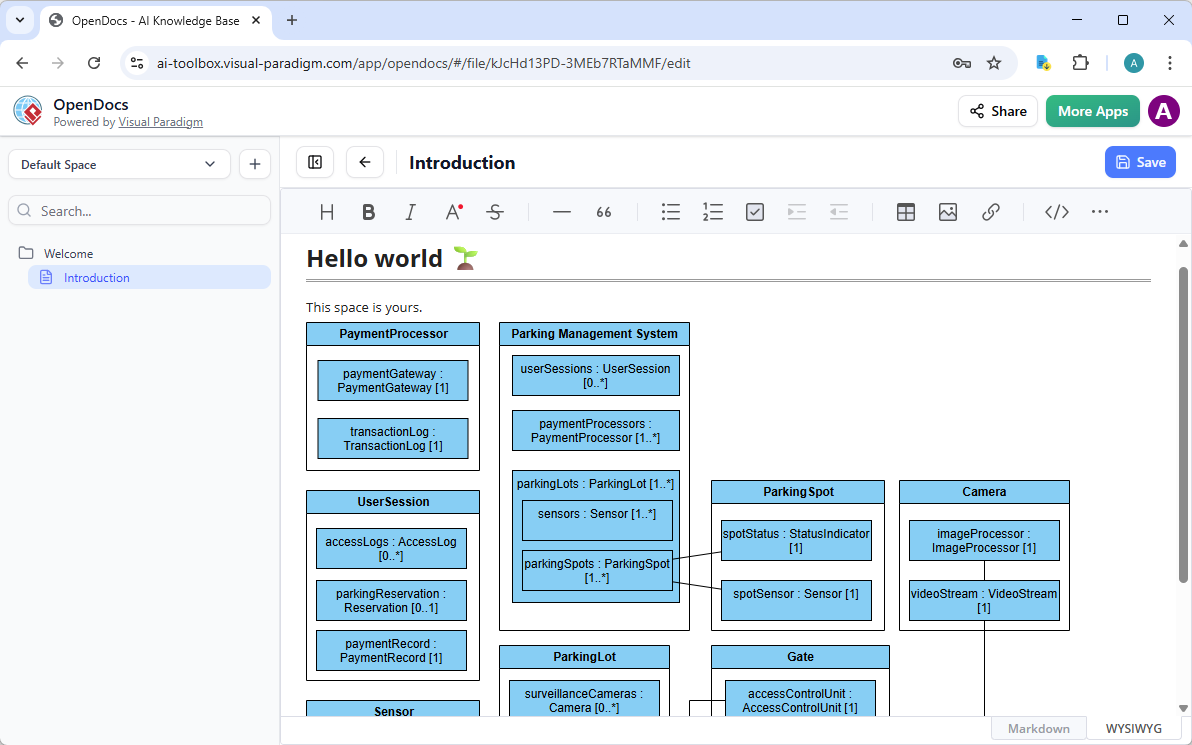
OpenDocs transforms how engineering teams share architectural knowledge. It allows you to generate UML composite structure diagrams directly within your documentation, turning static pages into interactive technical wikis.
How to Insert an AI-Generated Composite Structure Diagram into OpenDocs
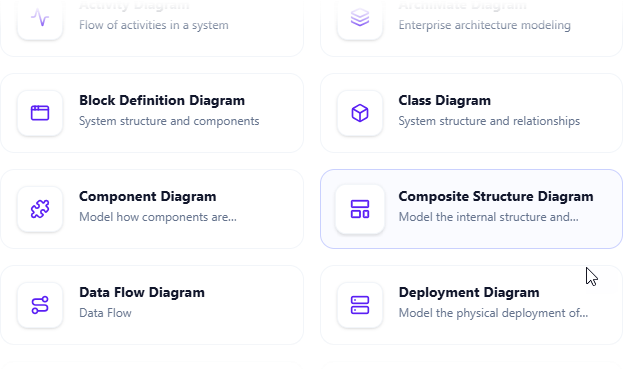
- Open the Editor: In your OpenDocs page, click Insert > Diagram > Composite Structure Diagram. This opens the modeling window.
- Activate the AI: Look for the Create with AI button in the top-right corner of the editor window and click it to open the AI input screen.
- Describe Your Architecture: Type a detailed description, such as “Internal structure of a Car class with Engine, Wheels, and Transmission parts connected via ports,” and click Generate.

- Refine the Model: The AI renders the diagram instantly in the editor. Use the drag-and-drop tools to fine-tune labels, adjust ports, or add constraints.
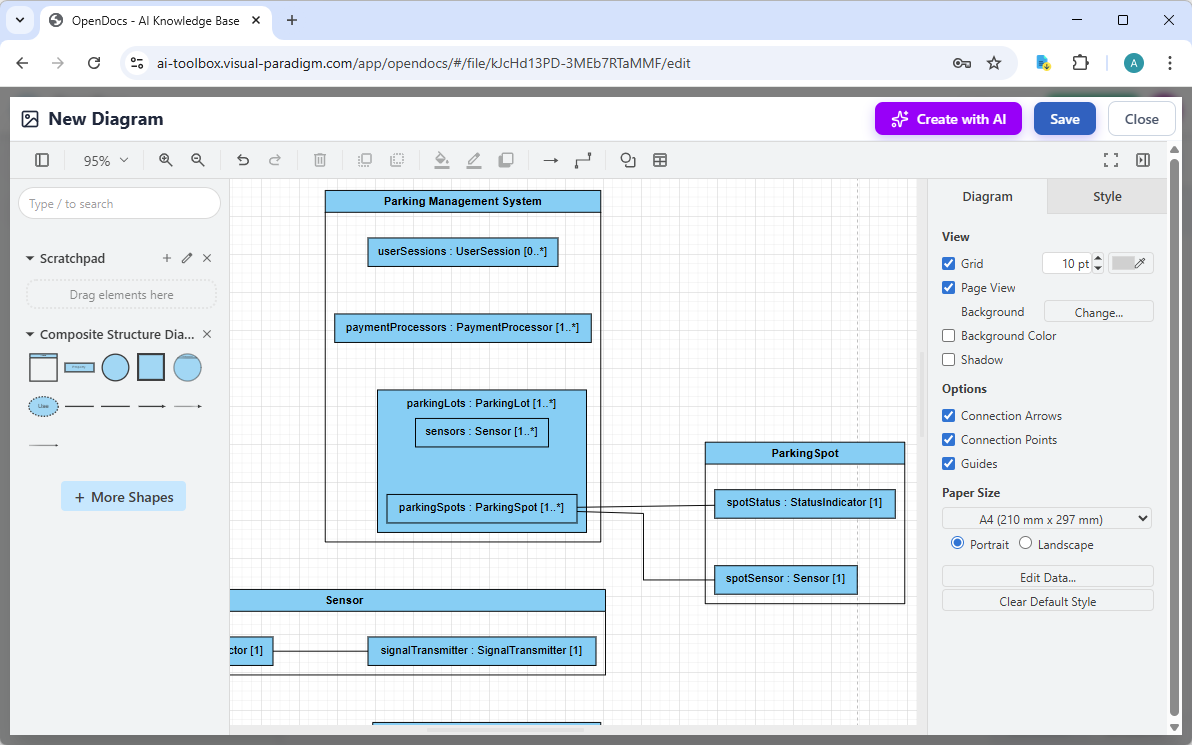
- Embed and Save: Once satisfied, click Save and then Close. The diagram is now embedded as a live, editable visual block in your document.
AI Visual Modeling Chatbot: Conversational Component Decomposition
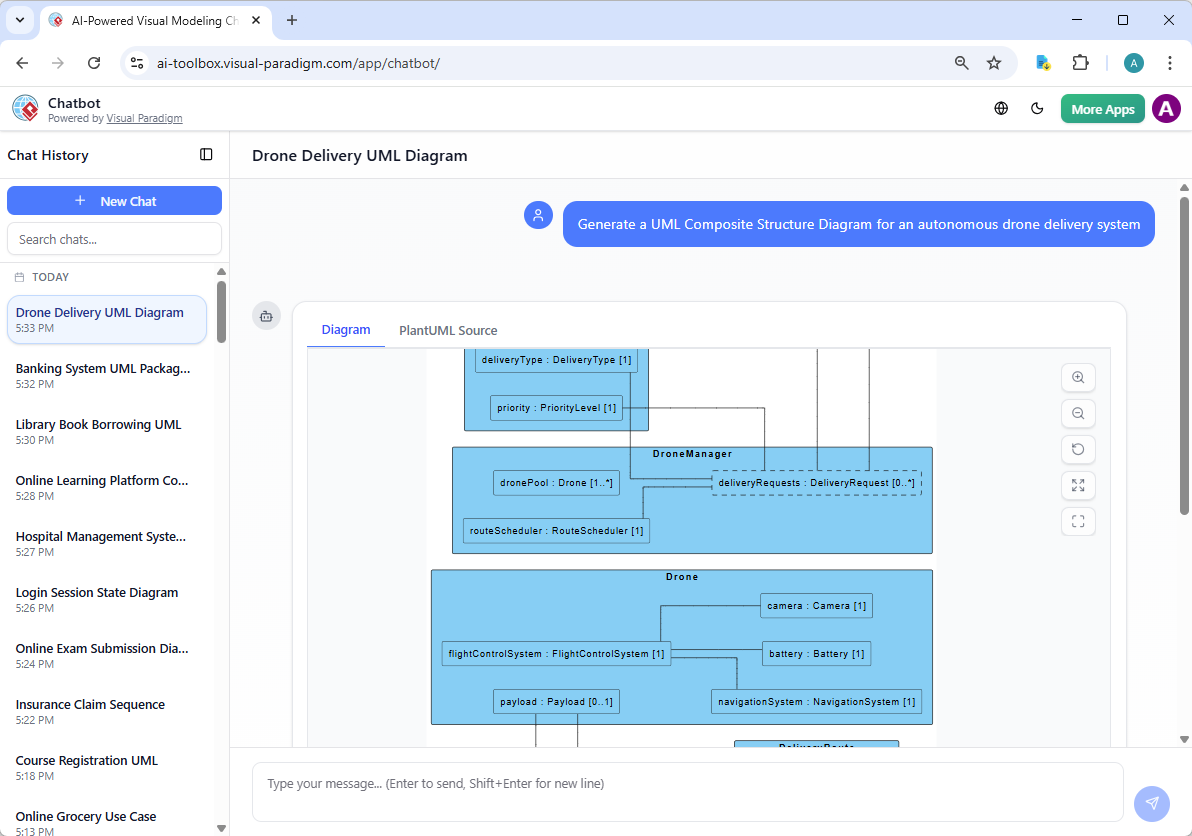
The AI Visual Modeling Chatbot is the ultimate tool for rapid brainstorming and agile prototyping. It acts as an AI UML diagram maker that bridges the gap between a conceptual idea and a professional model through simple dialogue.
Simply ask: “Generate a UML Composite Structure Diagram for an autonomous drone delivery system.” The UML internal structure AI renders the model in seconds.
Intelligent Refinement and Analysis
The chatbot doesn’t just draw; it understands context. You can keep the conversation going to refine your architecture or ask for an explanation of the relationships:

Why Choose Visual Paradigm as Your AI Composite Structure Diagram Tool?
| Modeling Requirement | Visual Paradigm AI | Standard AI Drawing Apps |
|---|---|---|
| Port & Connector Logic | Supports Delegation and Assembly connectors | Generic lines only |
| Internal Part Modeling | Maintains parent-child class hierarchy | Independent boxes only |
| Professional Notation | Full UML 2.5 compliance | Approximated visuals |
Ready to Master Complex System Modeling?
Stop wrestling with manual drawing tools. Use Visual Paradigm’s integrated AI-powered diagram software to generate, refine, and document your internal architectures with speed and precision.
Download VP Desktop | Try the AI Chatbot Online
Next Steps: From Structure to Behavior
Defining the internal architecture is just the beginning. Now that you’ve modeled the what, it’s time to model the how:
- Define Object Lifecycle: Use our AI State Machine Diagram Generator to see how your components change states.
- Model Interactions: Visualize the communication between your internal parts with the AI Sequence Diagram Tool.