


Creating package diagrams used to mean hours of dragging boxes, aligning dependencies, and fixing layouts just to show how your software modules organize. It’s tedious, especially for large systems where packages nest and dependencies multiply fast. What if you could describe your architecture in plain words and get a clean, editable UML package diagram instantly? That’s where an AI diagram generator changes everything—and Visual Paradigm does it better than anyone else.
As a leading visual modeling tool since 2002, Visual Paradigm supports over 100 diagram types, including full UML coverage. Now supercharged with AI, our ecosystem lets you generate, refine, collaborate on, and embed package diagrams across four integrated platforms. Whether you’re a software architect mapping dependencies or a team lead documenting module structure, you’ll find the right workflow here. Let’s look at each platform and see how they work together for end-to-end package diagramming.
VP Desktop: Your Powerhouse for AI-Driven Package Diagram Creation and Editing
VP Desktop is where serious modeling happens. It’s our flagship application, packed with enterprise features like traceability, version control, code engineering, and team collaboration. When it comes to package diagrams, the AI integration shines.
With the built-in AI Diagram Generator, you simply type a description—like “Create a package diagram for a microservices-based e-commerce system with separate packages for user auth, inventory, payments, and order processing”—and the AI builds it instantly. The result isn’t a flat image. It’s a native, fully editable Visual Paradigm diagram. Packages appear with proper nesting, dependencies show as arrows following UML standards, and everything aligns neatly.
- Generate complex package structures in seconds from text prompts
- Refine with drag-and-drop, add stereotypes, constraints, or visibility icons
- Link packages to classes, components, or deployment models for real traceability
- Export to code skeletons or generate reports showing module dependencies
Imagine starting a new project. Instead of staring at a blank canvas, you kick off with an AI-generated base, then dive into details offline. No internet needed once the model loads. For professionals who need precision—think enterprise architects or dev teams—this beats one-shot online tools that leave you with uneditable junk.
How to Generate a Package Diagram with AI in VP Desktop
- From the main menu, select Tools > AI Diagram Generation. This opens the AI Diagram Generation window.
- In the window, choose your desired diagram type from the dropdown list. In this case, Package Diagram.
- In the text area, describe your project, problem, system, or scenario.
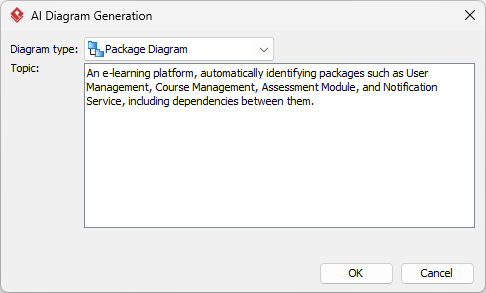
- Click OK to start the generation.
- The AI will create the diagram automatically.
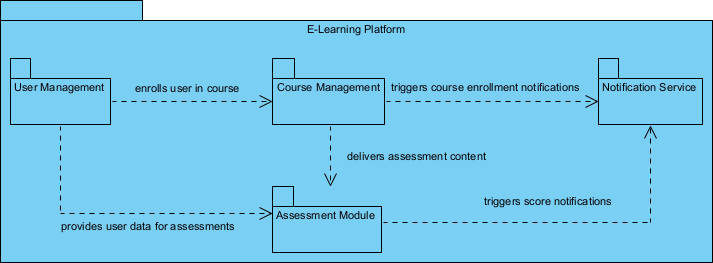
It appears as a fully editable, native Visual Paradigm diagram (not just an image). You can now:
- Edit elements, relationships, layout, or properties
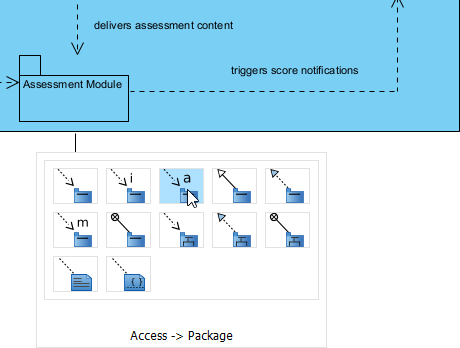
- Add more details manually
- Export as image (PNG, SVG, etc.), PDF, or use in reports
- Generate code or documentation if applicable
- Edit elements, relationships, layout, or properties
OpenDocs: Embed and Share Live Package Diagrams in Collaborative Documents
Diagrams don’t live in isolation. They explain architecture in docs, wikis, or reports. OpenDocs turns that into something dynamic.
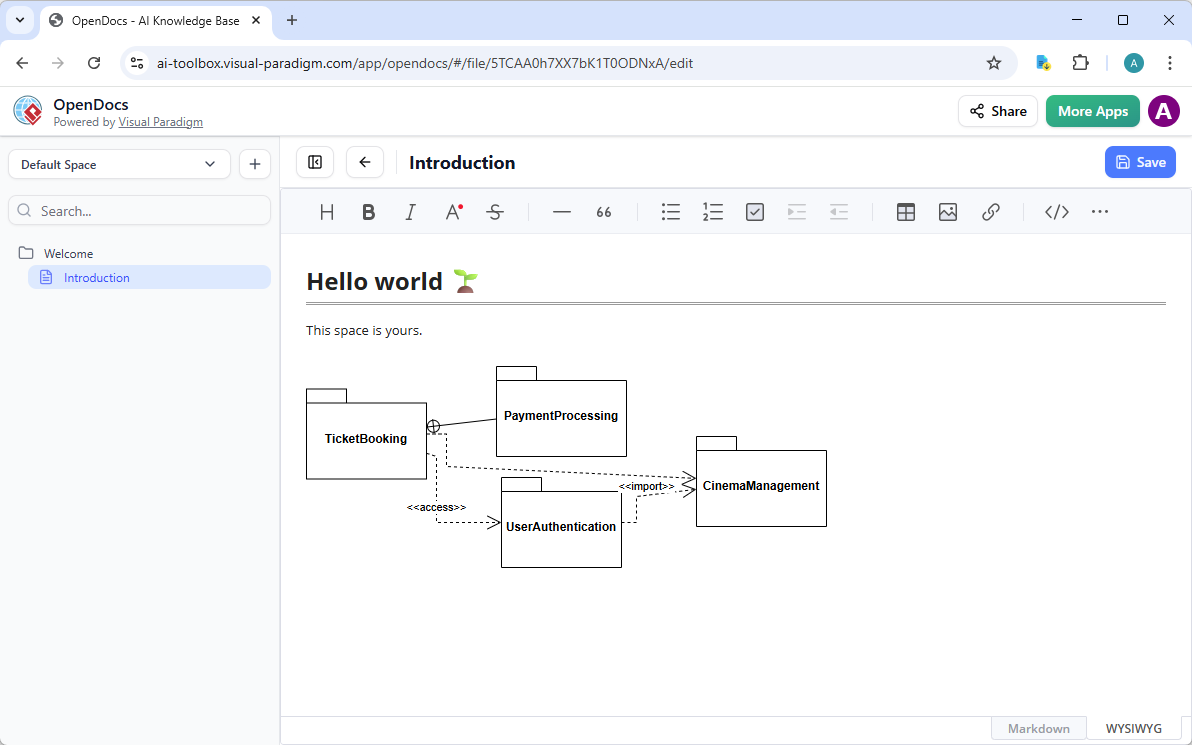
Think of OpenDocs as your smart knowledge base—similar to Notion but built for visual modeling. You generate a package diagram (maybe via the chatbot or desktop), then embed it directly into a page. It’s not a screenshot. The diagram stays live and editable inline.
Team members click elements to zoom, edit packages, or update dependencies without leaving the document. Perfect for:
- Architecture decision records showing module boundaries
- Developer handbooks explaining package organization
- Stakeholder reports visualizing high-level system structure
Changes sync across views. Someone refines the diagram in desktop? It updates in OpenDocs automatically. This keeps everyone aligned without version chaos. For teams that value knowledge sharing, OpenDocs makes package diagrams part of living documentation—not buried files.
How to Insert an AI Generated Package Diagram into Your OpenDocs Page
- Open or create a page in OpenDocs: Log in to your Visual Paradigm Online workspace, navigate to OpenDocs, and either open an existing page or create a new one (via + New Document Page or similar).
- Insert a diagram: In the page editor, look at the top toolbar (or floating toolbar) and click Insert. From the popup window, select Diagram > Package Diagram.
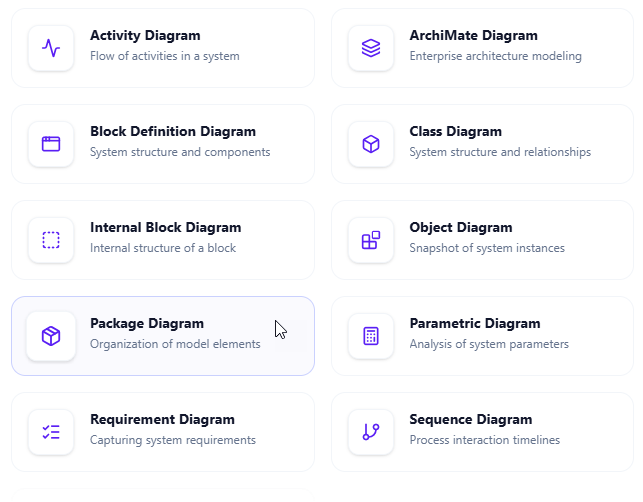
- Start creating the diagram with AI: This opens the diagram editor window. You can build it manually by dragging and dropping elements if you prefer. To use AI instead: Look for Create with AI in the top-right corner of the editor window and click it.
- Describe your problem and generate: In the text input area that appears, type a clear, detailed description of your system or scenario. Click Generate.
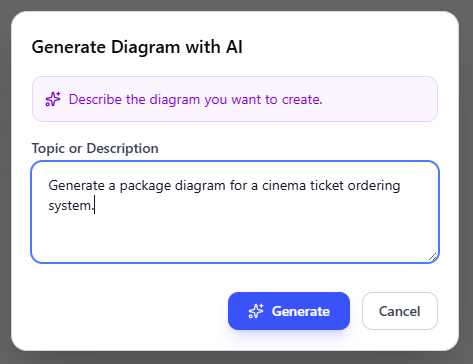
- Review, refine, and embed the diagram: The AI generates a professional package diagram instantly.
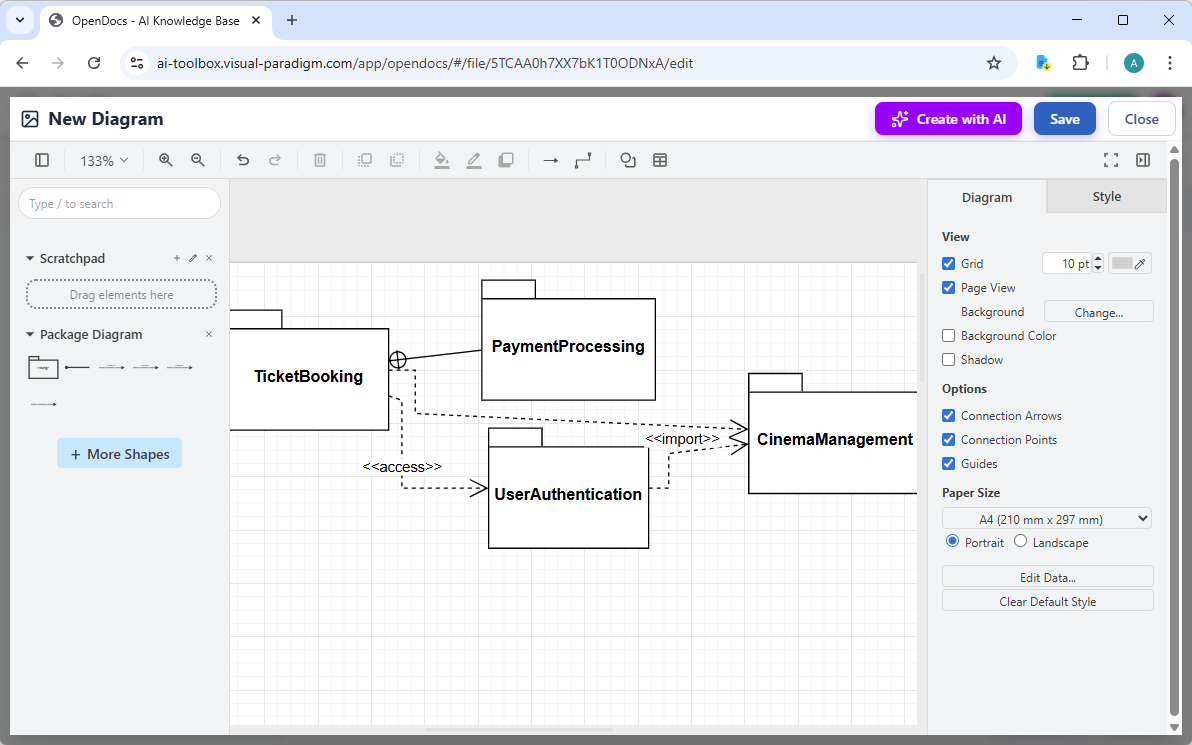
Use the intuitive drag-and-drop editor to touch up anything: move elements, adjust labels, add notes, change styles, etc. When you’re happy with it, click Save. Then click Close. The diagram is now embedded directly into your OpenDocs page as a live, editable visual block. You can view it inline without leaving the document.
AI Visual Modeling Chatbot: Conversational Package Diagram Generation and Iteration
Sometimes you just want to brainstorm fast. That’s the AI Visual Modeling Chatbot‘s sweet spot.
Chat with it naturally: “Generate a package diagram showing layered architecture with presentation, business logic, data access, and utilities packages.” It creates the diagram right there. Not happy? Say “Add a security package and make it depend on utilities” or “Merge business logic and data access into services.” The AI updates instantly.
You can ask follow-ups too:
- “Explain the dependencies in this package diagram”
- “Suggest improvements for better modularity”
- “Generate a report summarizing the package structure”
It’s ideal for quick prototypes or overcoming blank-page syndrome. The chatbot bridges beginners to experts—describe your idea casually, get professional output. Then export to VP Desktop for deeper work or embed in OpenDocs. Speed plus flexibility makes this a game-changer for agile teams iterating on architecture.
How to Generate a Package Diagram with AI Chatbot
-
Open the AI Chatbot:
- Web access: Go to https://chat.visual-paradigm.com/ (or https://ai-toolbox.visual-paradigm.com/app/chatbot/ as an alternative entry point).
- VP Desktop access: In Visual Paradigm Desktop, select Tools > Chatbot from the main menu. (This opens the same AI assistant integrated within your desktop environment.)
-
Start a new chat session: Click New Chat (on the left sidebar or as a prominent button) to begin a fresh conversation.
-
Describe what you want: In the text input area at the bottom, type a clear description of your project, system, or scenario (e.g. “Create a UML Package Diagram for a banking system”). Press Enter (or click the send icon) to submit your message.
-
View and refine the diagram: The AI generates the diagram almost instantly.
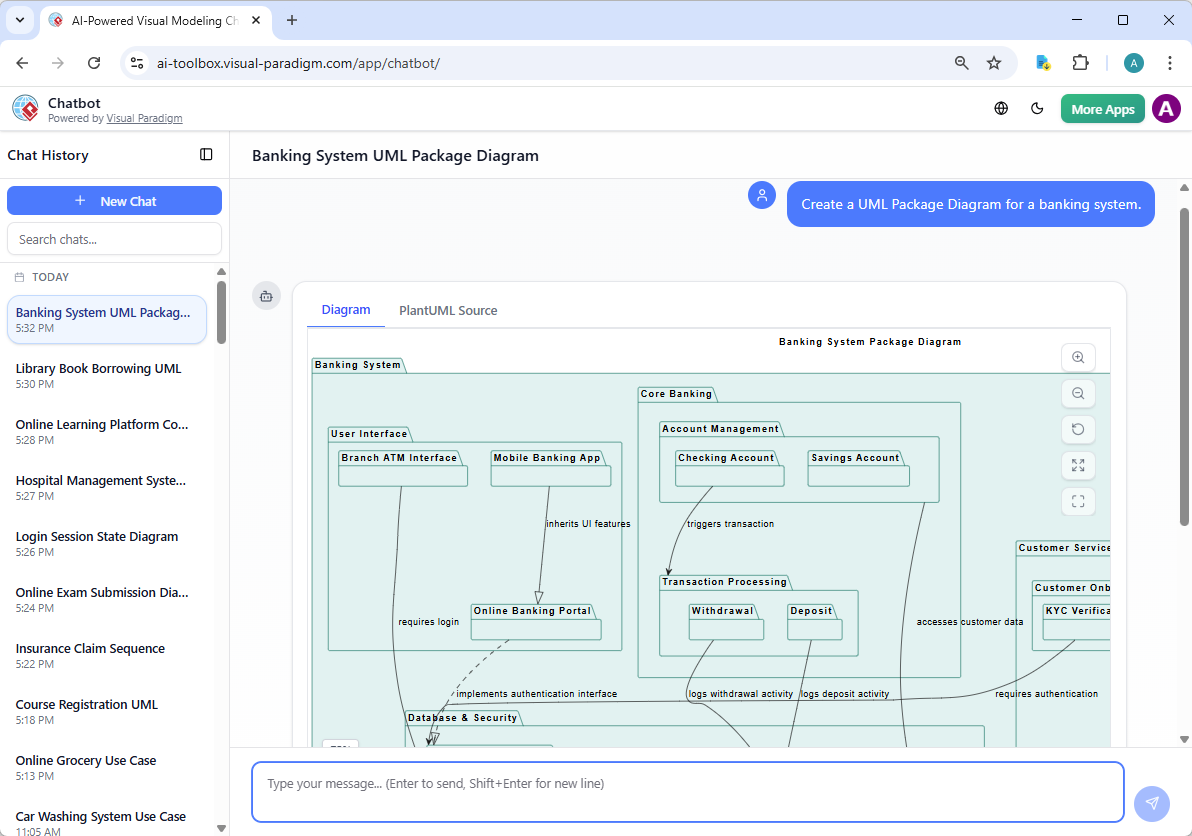
This is where the chatbot shines: keep the conversation going! Follow-up examples:
- “Add an element…”
- “Explain the diagram…. “
- “Generate a brief report summarizing ….”
Web Apps: Guided, Step-by-Step Tools for Consistent Package Modeling
Web Apps (not fully supporting package diagrams right now) offer browser-based, guided workflows for specific paradigms. They enforce best practices and traceability, great for methodical projects.
While package diagram support is expanding in our AI ecosystem, these specialized studios shine for related modeling—like ensuring your packages align with C4 models or requirements. You build step-by-step with AI hints, avoiding common mistakes. Outputs integrate seamlessly with desktop for full editing. As our platform grows, expect tighter package diagram guidance here too. For now, it complements the other three for structured, error-free visual modeling.
Why Visual Paradigm Stands Out as the Best AI Tool for Package Diagrams
Lots of AI diagram tools pop up—some generate pretty pictures from text, others handle one diagram type in isolation. They stop at generation. Visual Paradigm goes further.
Our ecosystem delivers:
- Widest coverage with true AI across UML and beyond
- Multiple workflows: chat for speed, desktop for depth, docs for sharing
- Real traceability—packages link to code, classes, requirements—not just visuals
- Seamless handoff between platforms—no recreating work
Unlike siloed generators that spit out static images, we give editable, professional models ready for implementation. You save time on setup, reduce errors through standards compliance, and scale for teams. It’s not hype. It’s a complete solution built for real projects.
Ready to Try the Best AI Package Diagram Generator?
Stop wrestling with manual tools or half-baked AI. Visual Paradigm gives you instant generation, powerful editing, collaborative embedding, and conversational refinement—all in one ecosystem. Whether you’re designing software architecture, documenting modules, or teaching UML, we’ve got you covered.
Head over to Visual Paradigm today. Start with the free trial, fire up the AI Chatbot, generate your first package diagram, and see how much faster modeling can be. The future of AI-powered visual modeling is here—jump in and make it yours.