


As a premier provider of visual modeling solutions, Visual Paradigm is proud to introduce comprehensive support for the ArchiMate 4 (Pre-Release) specification. This latest update to the ArchiMate® standard prioritizes architectural clarity and structural consistency, offering practitioners a more streamlined framework for mapping complex enterprise ecosystems.
1. The Shift to the ArchiMate Hexagonion
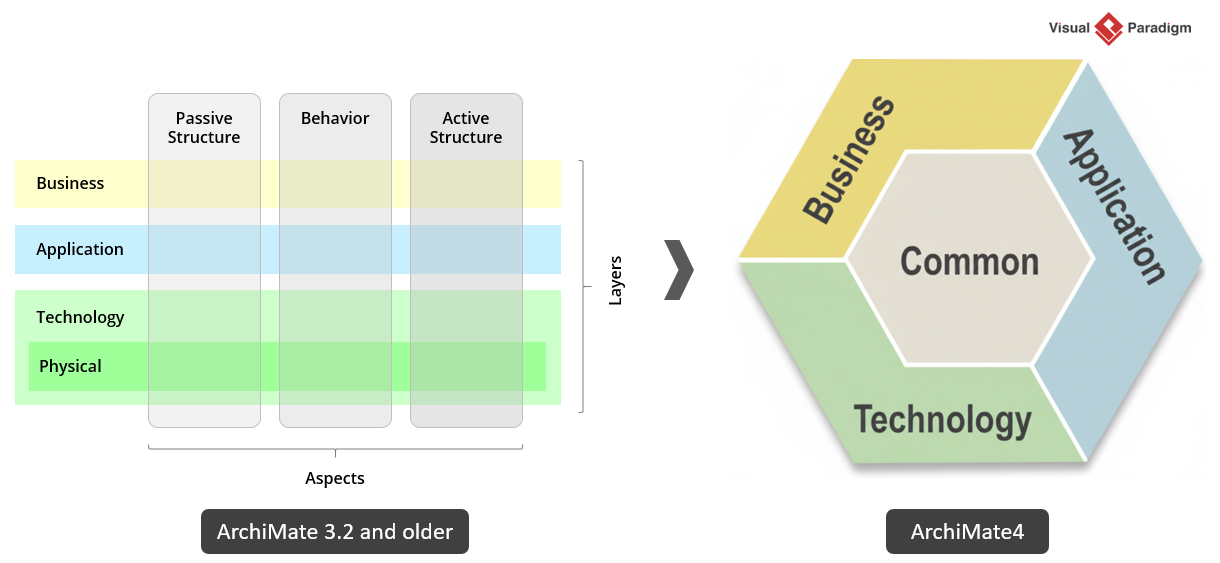
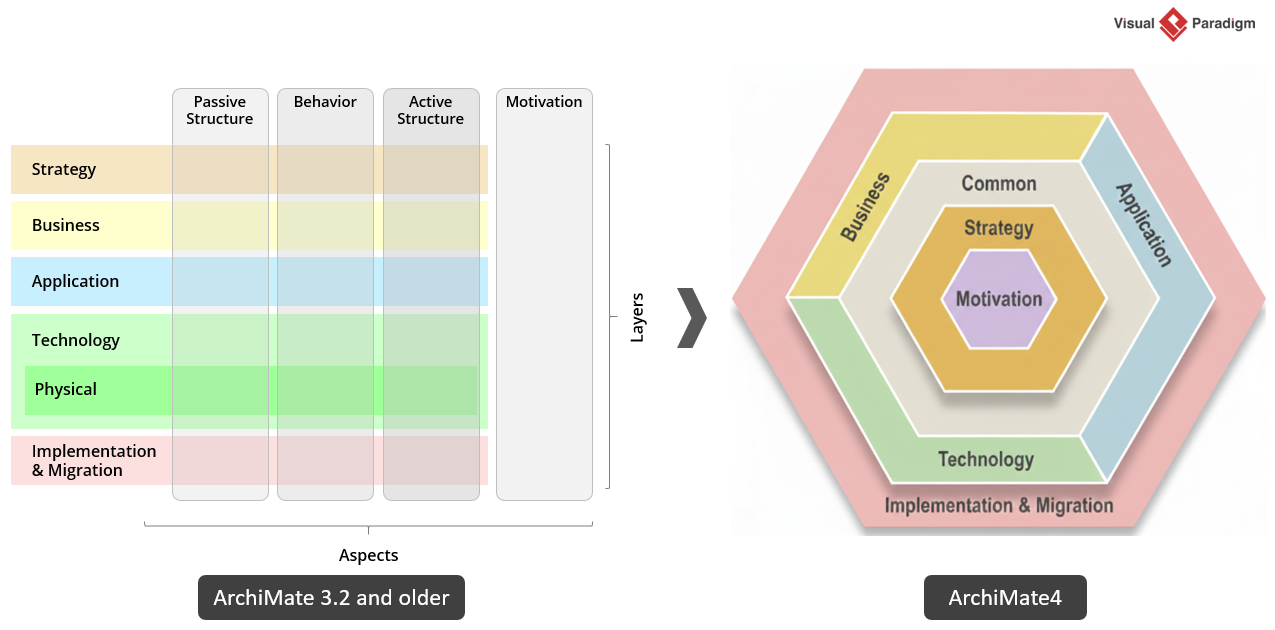
The most striking conceptual change in version 4 is the visual and structural reorganization of the framework. The classic matrix has evolved into the “ArchiMate Hexagonion.”
- Transitioning to Domains: The framework has moved away from the restrictive “layer” terminology, adopting the more versatile “domain” classification.
- Motivation-Centric Design: By placing the Motivation Domain at the heart of the Hexagonion, the specification reinforces that every technical or business design must stem from specific goals and strategic drivers.
The Strategic Edge: This restructuring ensures that enterprise architecture is viewed as an integrated whole—where strategy and motivation directly influence core technical and business execution.
The ArchiMate 4 Core Framework
The core language is now categorized into four primary domains, each defining specific active, behavioral, and structural components:
- Common Domain: Houses universal elements and behavioral concepts that function across all other domains.
- Business Domain: Focuses on organizational structures, customer relationships, and value creation.
- Application Domain: Details the software landscape and how data flows support business operations.
- Technology Domain: Covers the underlying infrastructure, spanning both IT and physical operational technology.
Complementing the core are three specialized areas:
- Motivation Domain: For modeling stakeholder interests and drivers.
- Strategy Domain: For mapping high-level strategic paths and resource choices.
- Implementation & Migration Domain: For documenting the roadmap from current to future states.
2. Consolidating Behavior and Structure
Version 4 significantly lowers the learning curve by unifying elements that were previously duplicated across different layers.
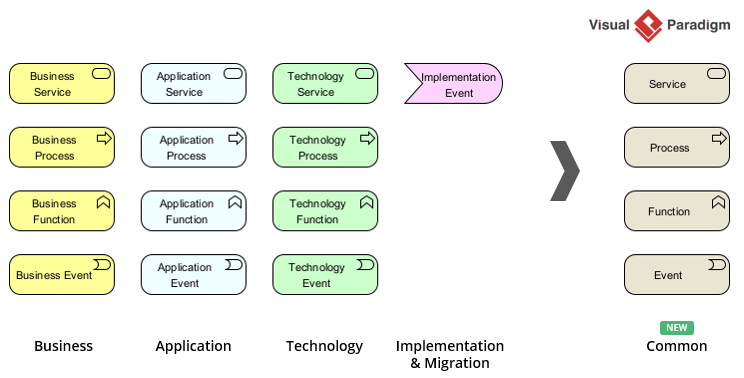
Unified Behavioral Concepts
ArchiMate 4 retires layer-specific behaviors in favor of Universal Behavior Elements: Service, Process, Function, and Event. This removes the need for specific “Implementation Events,” as the standard Event element now serves all contexts.
Streamlined Collaboration and Roles
- Unified Collaboration: Business, application, and technology collaborations are now a single, versatile Collaboration element.
- The Common Role: The “Business Role” has been generalized into a Role element that can be assigned to any active structure within the model.
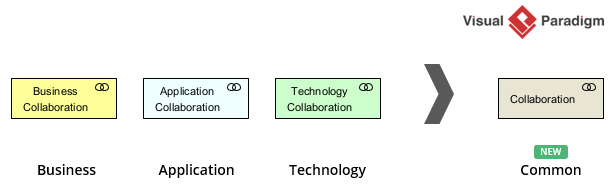
Modeler Impact: By reducing the total number of unique symbols, architects can focus on the logic of the model rather than searching for layer-specific icons.
3. Precision and Relationship Refinements
The logic behind how elements connect has been sharpened to support more data-driven architecture.
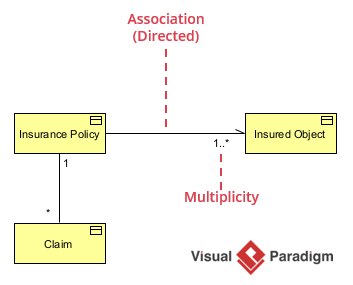
Introduction of Multiplicity
Modelers can now define cardinality (e.g., 1..1, 0..*) on relationships. This allows for the formalization of business rules and constraints directly within the visual model.
Structural Relationship Changes
- Removal of Composition: The Composition relationship is no longer part of the core set. Modelers are encouraged to use Aggregation or the Grouping element instead.
- Path Utility: The Path concept has been moved to the Common Domain to reflect its cross-functional use, and its connection to active structures is now defined via Realization.
4. Deprecated Elements and Migration
To keep the metamodel lean, ArchiMate 4 has retired several specialized elements that can now be represented through general concepts:
- Interactions: Specific Business/Application/Technology interactions have been removed.
- Constructs: Contract, Constraint, Gap, and Representation are no longer separate entities.
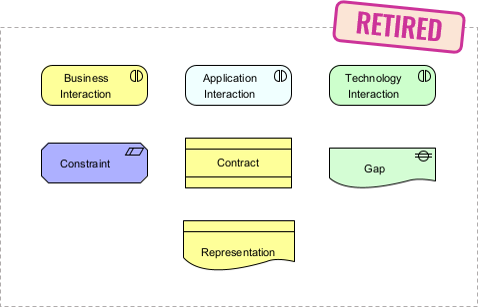
Contract can now be modeled as a specialized Business Object, and a Constraint can be effectively represented as a Requirement.ArchiMate 4 in Practice: Model Example
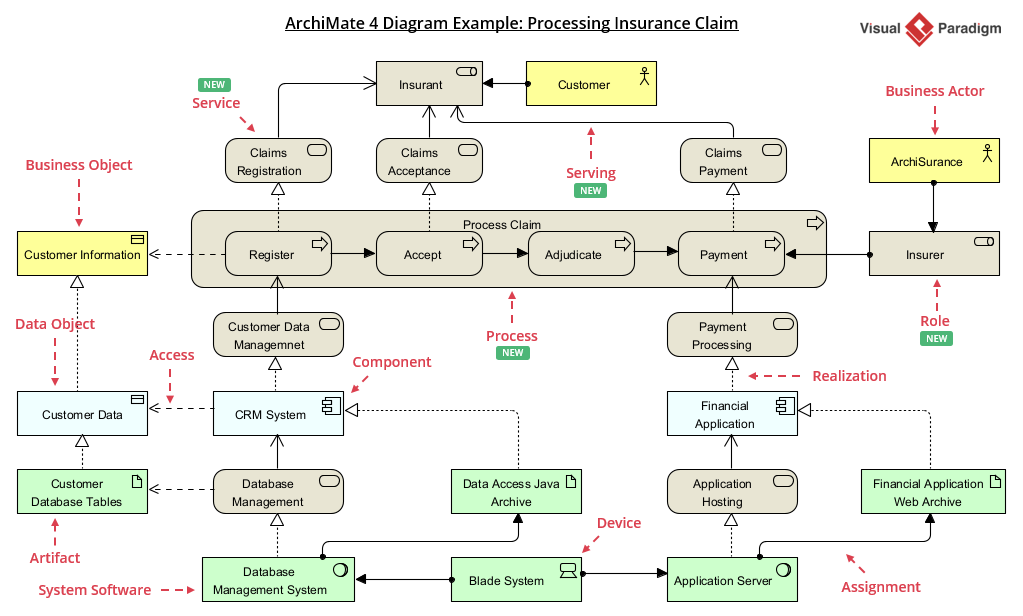
The following diagram illustrates how ArchiMate 4 integrates the Common, Business, and Technology domains into a single, cohesive insurance claim processing view.
Summary: Embracing the Future of EA
ArchiMate 4 represents a significant leap toward a more user-centric modeling language. By consolidating redundant elements and focusing on cross-domain flexibility, it empowers architects to create models that are easier for stakeholders to digest.
Ready to explore these features? Visual Paradigm 18.0 provides full support for the ArchiMate 4 Pre-Release, keeping your enterprise architecture at the cutting edge of industry standards.